
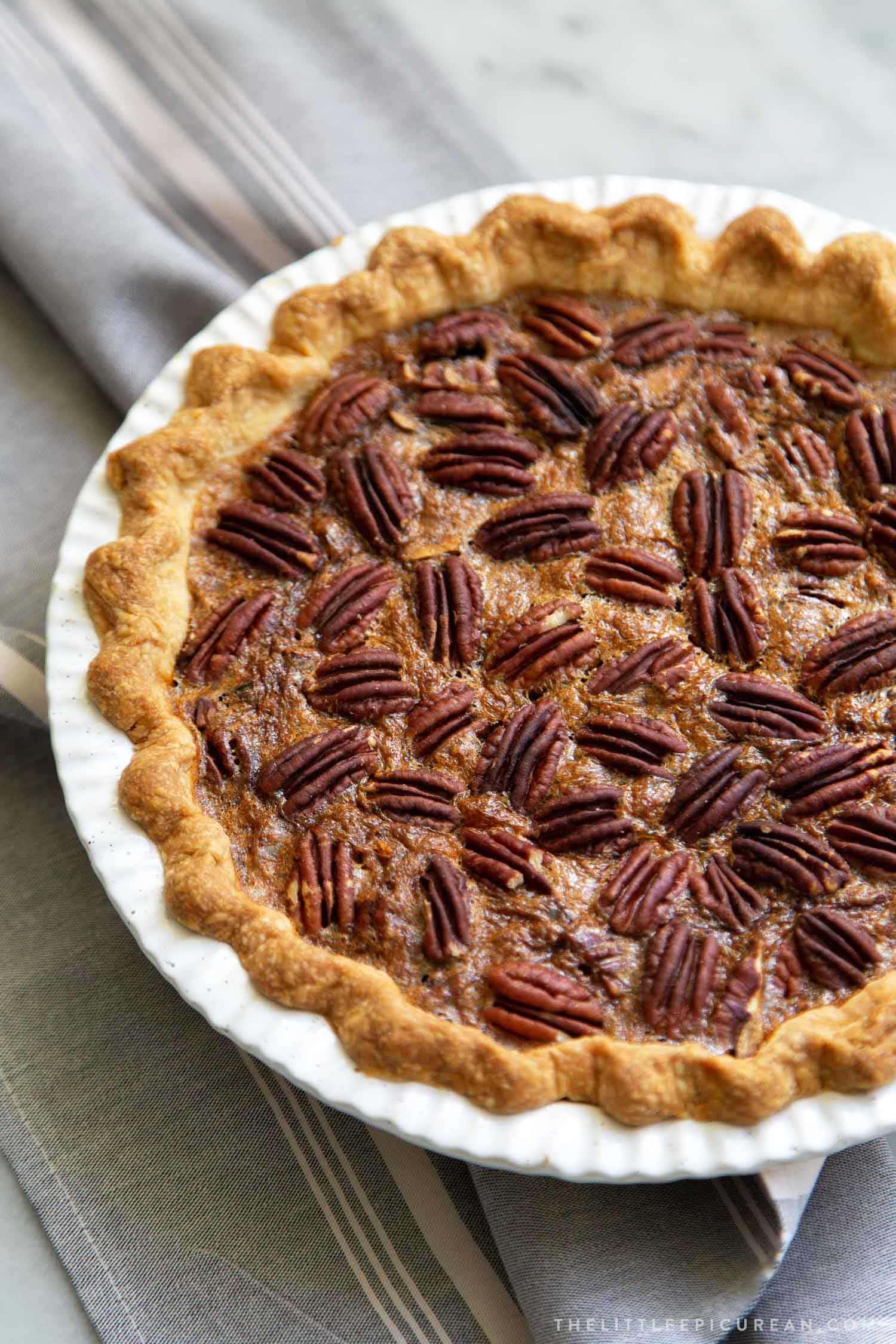
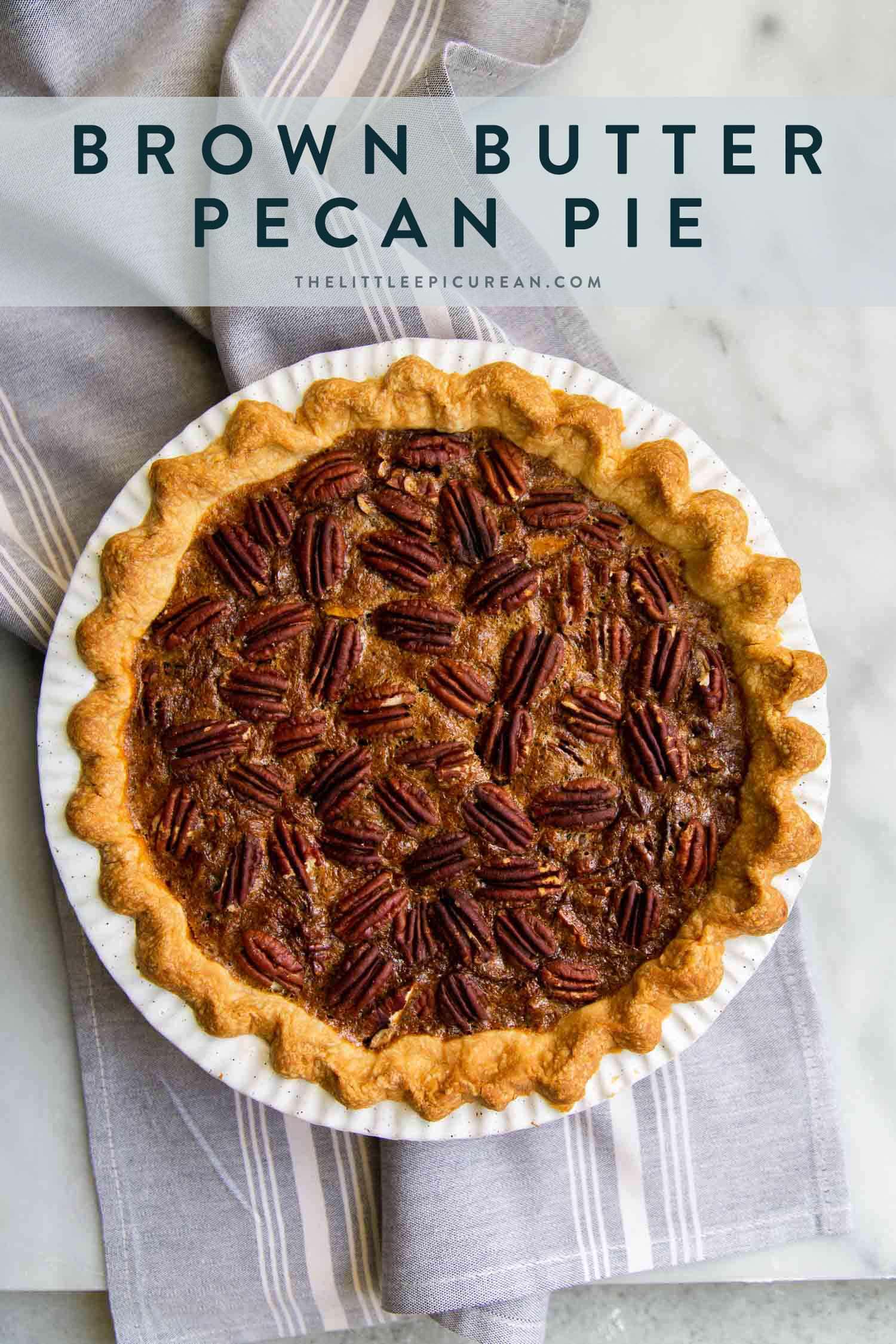
This brown butter pecan pie uses melted brown butter to enhance the warm nutty flavors of this classic Thanksgiving pie.
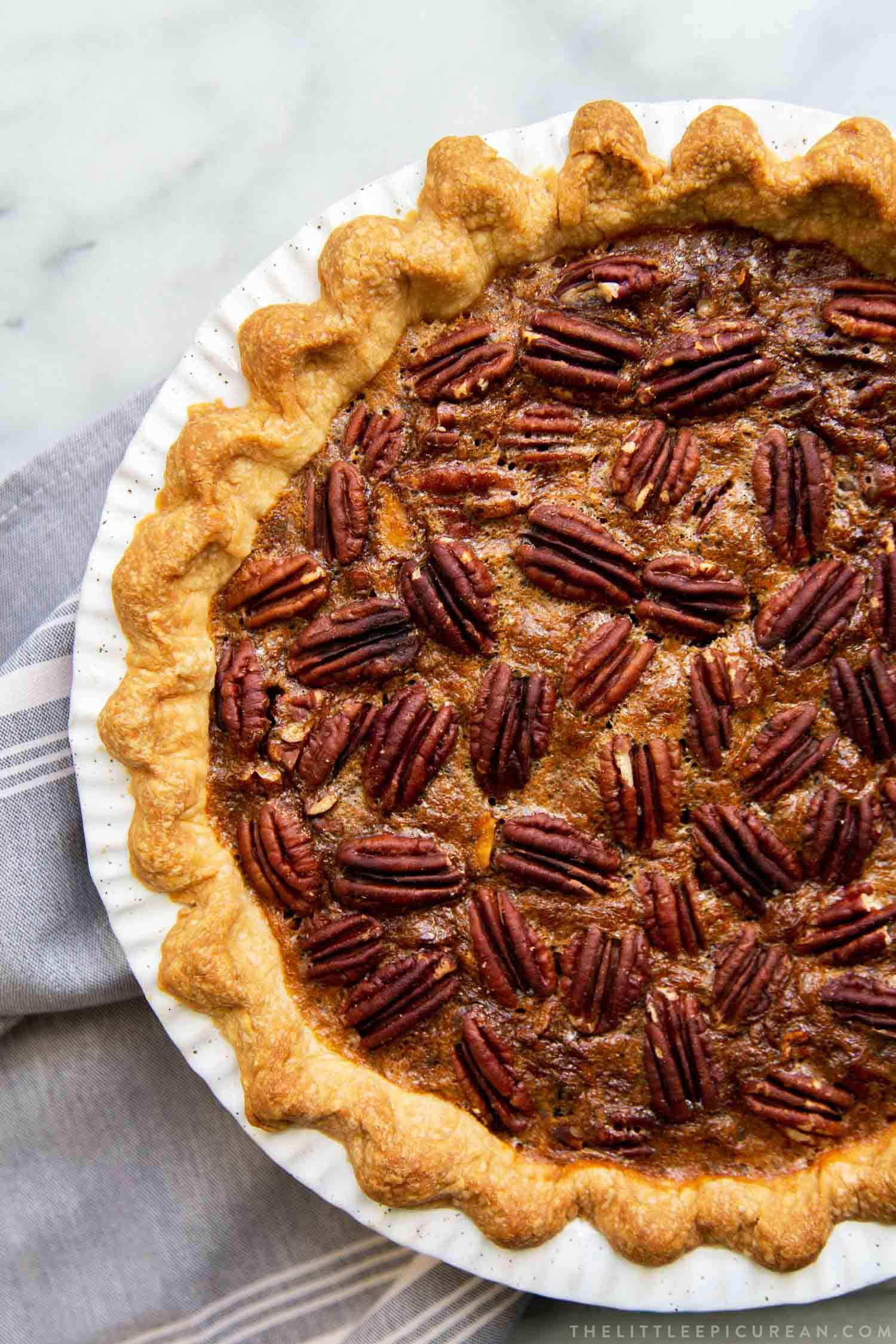
I can tell you that the secret to an unforgettable pecan pie isn’t a fancy technique—it’s brown butter. This simple step transforms the classic Thanksgiving dessert from good to absolutely extraordinary, adding layers of nutty, caramelized depth that you simply can’t get from regular melted butter.
As a classically trained chef, I’ve tested countless pecan pie recipes. This brown butter version consistently wins over even the most devoted pumpkin pie fans at my Thanksgiving table. The toasted, almost toffee-like notes from the brown butter complement the pecans perfectly, creating a pie that tastes infinitely more complex than the effort required.
For my family, pecan pie isn’t just another dessert option—it’s the Thanksgiving tradition. While others debate pumpkin pie versus apple pie, we know exactly what’s taking center stage on our holiday table.
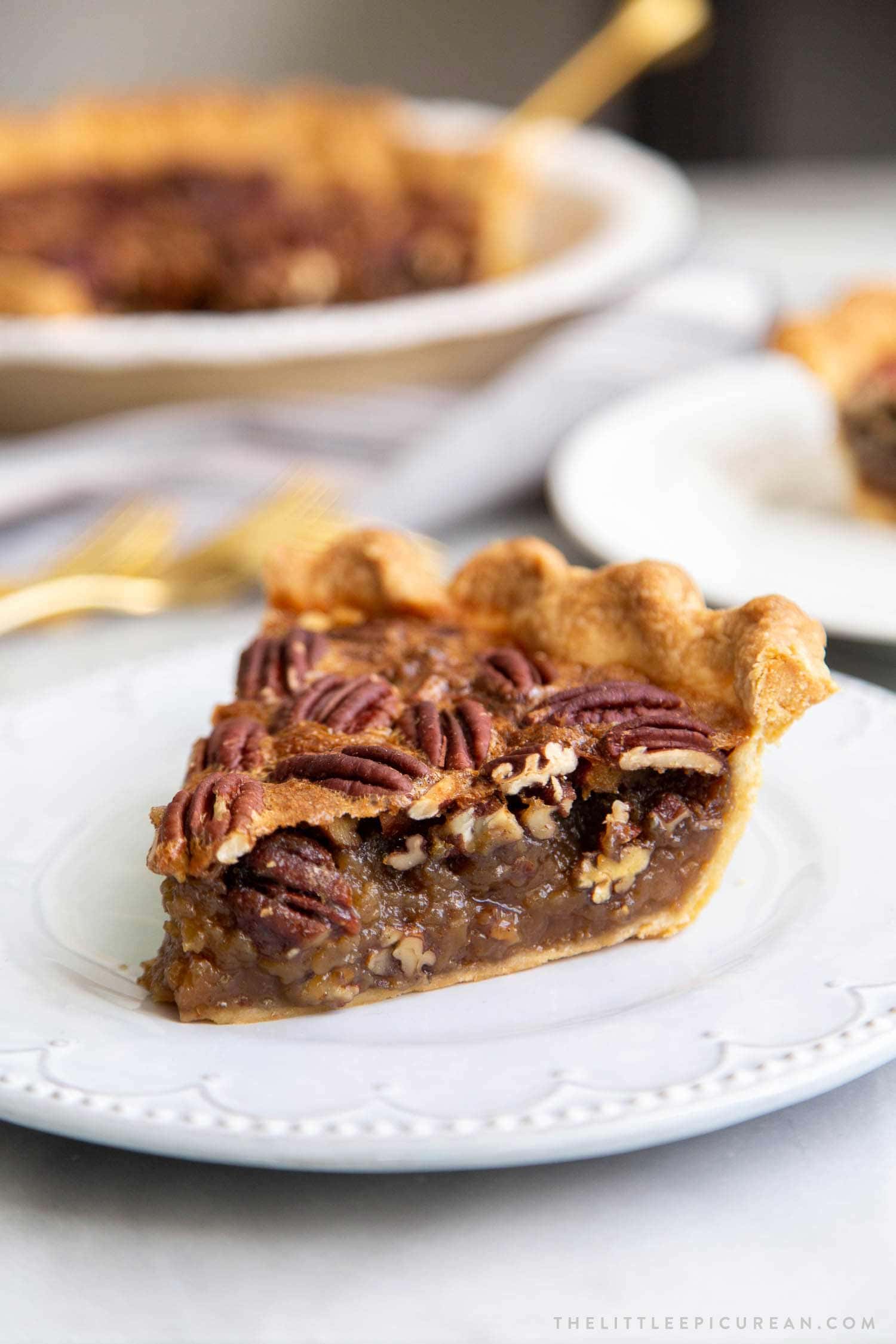
Table of Contents
Why This Brown Butter Pecan Pie Recipe Works
- Professional technique, foolproof results. Brown butter isn’t just about flavor—it’s about building complexity through the Maillard reaction. Those toasted milk solids create hundreds of new flavor compounds that make this pie taste incredible.
- The par-baking secret. Most home bakers skip this step, then wonder why their bottom crust is soggy. Par-baking (also called blind baking) the crust ensures a crisp, flaky base that can stand up to the sweet filling.
- All-butter pie dough. While shortening makes dough easier to handle, butter creates incomparably rich, flavorful crust. I’ll show you how to work with it successfully, even if you’re nervous about pie dough.
- Balanced sweetness. The combination of granulated sugar, brown sugar, and corn syrup creates the ideal texture—set but not stiff, sweet but not cloying. Each sweetener plays a specific role in both flavor and structure.
How to Make Flaky All-Butter Pie Crust
Here’s a truth from my restaurant days: most professional pastry chefs prefer all-butter pie dough for dessert pies, despite shortening being easier to work with.
Why? Because butter creates layers of flaky, flavorful crust that simply can’t be replicated. The difference is especially noticeable in pies with bold fillings like this one—you want that buttery richness to complement the sweet, nutty filling.
Working with all-butter dough requires a bit more care (it’s more temperature-sensitive), but I’ll walk you through exactly how to handle it for foolproof results in this comprehensive pie dough post.
Food processor vs. by hand:
Both methods work beautifully and produce similar results. I typically use a food processor for speed, but hand mixing gives you more control and helps you avoid overworking the dough.
About This Dough Recipe:
The pie dough listed makes enough for two single-crust pies or one double-crust pie. I always make the full batch even when I only need one pie—the extra dough keeps in the freezer for up to a month, and having pie dough on hand is a game-changer.
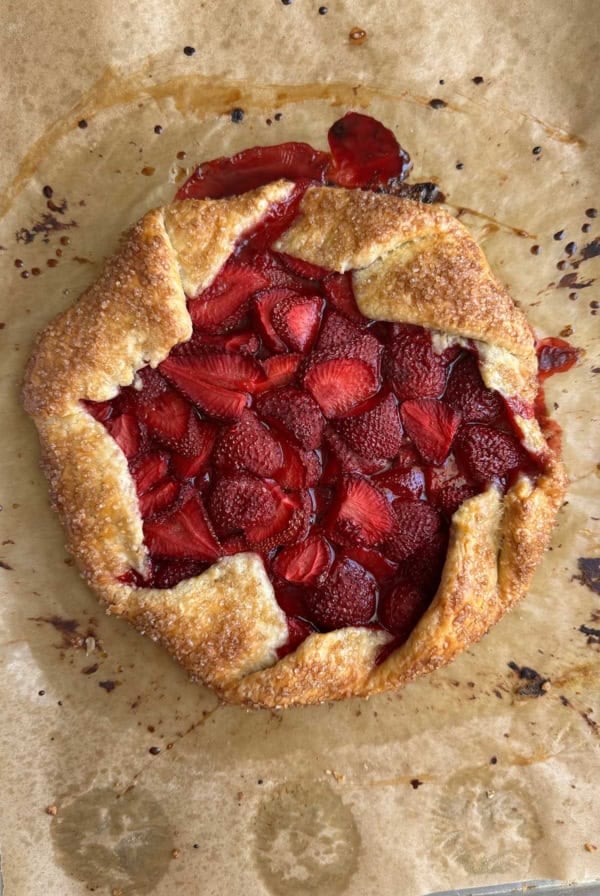
It’s the same trusted recipe I use for my super popular strawberry pie.
The Golden Rule:: Keep everything cold. Cold butter, cold water, cold eggs. This is non-negotiable for flaky pie crust.
How to Brown Butter for Pecan Pie
Browning butter is one of those restaurant techniques that sounds intimidating but is actually simple—you just need to know what to look for. Here’s what happens and how to nail it every time.
The Science:
Butter contains water, butterfat, and milk solids. When you melt and heat butter, the water evaporates and those milk solids begin to toast in the fat, eventually turning golden brown. This process creates that signature nutty, caramelized flavor that elevates everything from cookies to vegetables.
Once the milk solids turn that rich golden brown color, you’ve created brown butter—sometimes called beurre noisette in French kitchens (literally “hazelnut butter” because of its nutty aroma).
Watch for These Visual and Aromatic Cues
- The butter will foam vigorously as water evaporates
- The foaming will subside—keep cooking, don’t stop here
- You’ll smell a distinctly nutty, almost hazelnut-like aroma (this is your main signal)
- Golden brown specks will appear at the bottom of the pan
- The color will shift from yellow to amber to light brown
Stop at light brown. The milk solids can go from perfectly browned to burned in seconds. As soon as you see light brown specks and smell that toasted aroma, remove from heat immediately and pour into a heatproof bowl. The butter will continue cooking in the hot pan if you leave it there.
Don’t skip the browned bits. When you pour the brown butter into your bowl, use a rubber spatula to scrape out every last bit of those toasted milk solids from the pan. Those little specks are pure flavor gold.
Brown butter is super versatile. It’s used in these chocolate chunk cookies, old fashioned donuts, and this pumpkin cake. And, it can even be used in savory foods like brown butter spaghetti!
Let’s Talk About Corn Syrup (Don’t Be Scared!)
Light corn syrup and high fructose corn syrup are NOT the same product. I’m not sure why light corn syrup has such a bad reputation, but let me clear this up.
Yes, they’re both made from corn. But structurally and chemically, they are completely different products. Don’t be afraid of light or dark corn syrup in baking—it serves important functions and is fine in moderation.
Light Corn Syrup (What We’re Using)
- Corn syrup is an invert sugar and a type of glucose syrup that prevents the formation of sugar crystals. This is crucial in candy making, ice cream, and yes, pecan pie.
- In professional kitchens, we use corn syrup because it allows ice creams and sorbets to stay smooth and creamy, gives chocolate sauces and glazes beautiful luster and shine, and prevents grainy textures in confections
- For pecan pie specifically, corn syrup is essential because it prevents sugar crystallization and allows the filling to set properly so you can cut clean slices. It acts like a glue, holding the filling together without making it stiff or hard.
- While it’s called “corn” syrup, this type of syrup can also be made from potatoes, wheat, or other starches.
High Fructose Corn Syrup (What We’re NOT Using)
HFCS undergoes additional processing to make it much sweeter than standard light corn syrup. It’s often used by large food manufacturers because it’s significantly cheaper than granulated sugar. You won’t find HFCS in bottles at the grocery store—it’s an industrial ingredient.
Bottom Line:: The light corn syrup you buy at the grocery store is a traditional baking ingredient that creates the perfect pecan pie texture. Don’t substitute it with honey, agave, or maple syrup—the filling won’t set properly and you’ll end up with a runny pie.
Pastry Chef Tips
Par-Baking Is Non-Negotiable
Par-bake (or blind bake) the pie dough to achieve a well-cooked, flaky pie shell that’s never soggy on the bottom. Line the pie dough with parchment paper and pie weights (dried beans or rice work great) to prevent it from forming air bubbles or puffing up in the oven.
The pie crust won’t be fully cooked after par-baking—it will finish cooking with the pecan filling during the second bake. This two-step process ensures a crisp bottom crust and gives you a chance to fix any crimping that may have shrunk during the initial bake.
Don’t Overwork Dough
Overworking pie dough creates excess gluten. Gluten is a strong, stretchy protein that forms when flour and water mix—great for bread, terrible for tender pie crust.
Too much gluten makes dough tough, difficult to roll out, very elastic (it’ll shrink back as you roll), and prone to shrinking in the oven.
THE FIX:: If your dough feels tight or keeps shrinking back, stop working it. Let it chill in the fridge for at least 30 minutes (or even a few hours) to let the gluten relax. The dough will become much more cooperative.
Cooling is Crucial
The pie filling will be loose and jiggly straight from the oven—this is normal. It needs time to cool and set up properly. Be patient.
Common Questions
Yes! This pie actually improves after sitting. Bake it one or two days ahead, let it cool completely, then cover and store at room temperature. The extra time allows the filling to set properly and the flavors ample time to meld together. This is my go-to make ahead Thanksgiving dessert!
If you slice the pie while warm, it will definitely be runny. The filling needs at least 4 hours, preferably overnight, to completely set.
And another possible reason- check that your oven temperature is accurate with an oven thermometer. If your oven runs cool, the pie may be underbaked.
Of course, you may. Although homemade all-butter crust elevates this pie significantly. The flaky, buttery layers complement the filling in a way that store-bought crusts can’t quite match. That said, if you’re short on time, use a store-bought crust and definitely par-bake it according to package directions before adding the filling.
This happens when the dough is overworked or not chilled long enough before baking. The good news: you can gently press it back into shape while it’s still warm from the oven. For future pies, make sure to chill the shaped dough for at least 15 minutes before par-baking, and handle the dough as little as possible during rolling.
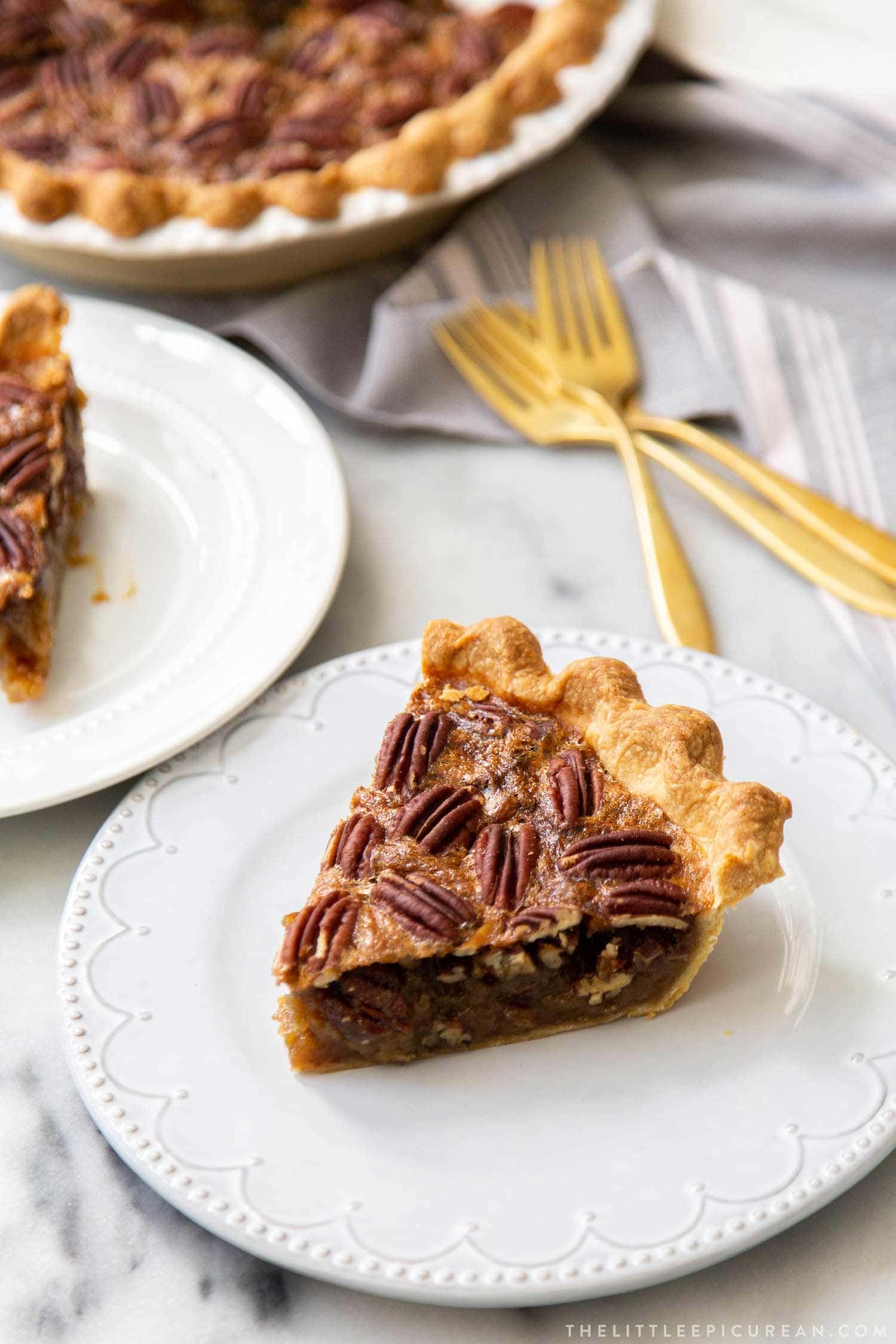
The center should still have a slight jiggle when you gently shake the pan, but the edges should be set. The pecans on top will be deeply toasted and fragrant.
Don’t wait for the center to be completely firm—it will continue to set as it cools. Overbaking will make the filling tough and dry
Serving Suggestions
Cool the pecan pie to room temperature before slicing. The filling needs at least 4 hours to set, but honestly, overnight is ideal. This isn’t just about texture—the flavors meld and develop beautifully as the pie sits.
Serve at room temperature with a dollop of barely sweetened whipped cream or a scoop of vanilla ice cream. The richness of the pie is perfectly balanced by something cool and creamy.
The Bottom Line
It’s become my family’s non-negotiable Thanksgiving dessert—and after one bite, you’ll understand why. That nutty aroma from the brown butter, the perfect balance of textures from the crisp crust to the smooth-but-sliceable filling, the generous amount of pecans in every bite—it all comes together into something truly special.
If you’ve never made pecan pie from scratch, this is your year. If you’re a pecan pie veteran, the brown butter will feel like a revelation. Either way, this is the recipe you’ll reach for every Thanksgiving from now on.
Brown Butter Pecan Pie
Ingredients
All Butter Pie Dough:
- 2 ¼ cup all-purpose flour (300 g)
- 1 teaspoon kosher salt
- ¼ cup granulated sugar (50 g)
- 1 cup unsalted butter (227 g), cold
- 2 large egg yolks, cold
- 5 Tablespoons ice cold water
Brown Butter Pecan Filling:
- 6 Tablespoons unsalted butter (85 g)
- 1 ½ cup pecan halves (160 g)
- ½ cup granulated sugar (100 g)
- ¾ cup dark brown sugar (150 g), packed
- ½ cup light corn syrup (150 g)
- 4 large eggs, room temp
- ½ teaspoon kosher salt
- 2 teaspoon pure vanilla extract
Instructions
Pie Dough:
- Pulse together flour, salt, and sugar in a food processor. Add cold butter one tablespoon at a time with the food processor running. Stop the machine once mixture is crumbly and like coarse sand in texture.
- Add yolks and water. Pulse for a few seconds until dough begins to come together in shaggy pieces. Remove dough from food processor bowl, dump onto a lightly floured surface, and finish kneading together by hand just until it comes together (don't overwork it).
- Divide dough into two equal portions. Flatten each into a disc or rectangle shape. Wrap tightly in plastic wrap. Chill in the refrigerator for at least 20 minutes or in the freezer for 10 minutes. Alternatively, refrigerate for up to 2 days before using.
Brown Butter:
- In a heavy-bottomed saucepan (light-colored is best), melt butter over medium heat. Once the butter has melted completely, continue to cook, swirling the pan occasionally to ensure even heating.
- The mixture will bubble and foam vigorously as the water evaporates—this is normal. Continue cooking. The bubbling will subside. Keep cooking until the butter smells distinctly nutty and the milk solids at the bottom of the pan turn a rich golden brown color.
- Immediately remove from heat and pour into a heat-safe bowl, being sure to scrape out as much of the browned milk solids as possible (they're flavor gold!). Set aside to cool slightly while you prepare the crust.
Pie Crust Assembly:
- Remove one portion of chilled pie dough from the refrigerator. Place on a lightly floured work surface. Roll dough into a circle about 10 inches in diameter and ¼-inch thick. (Tip: Place your pie plate upside down over the rolled dough to ensure it's the correct size with overhang.)
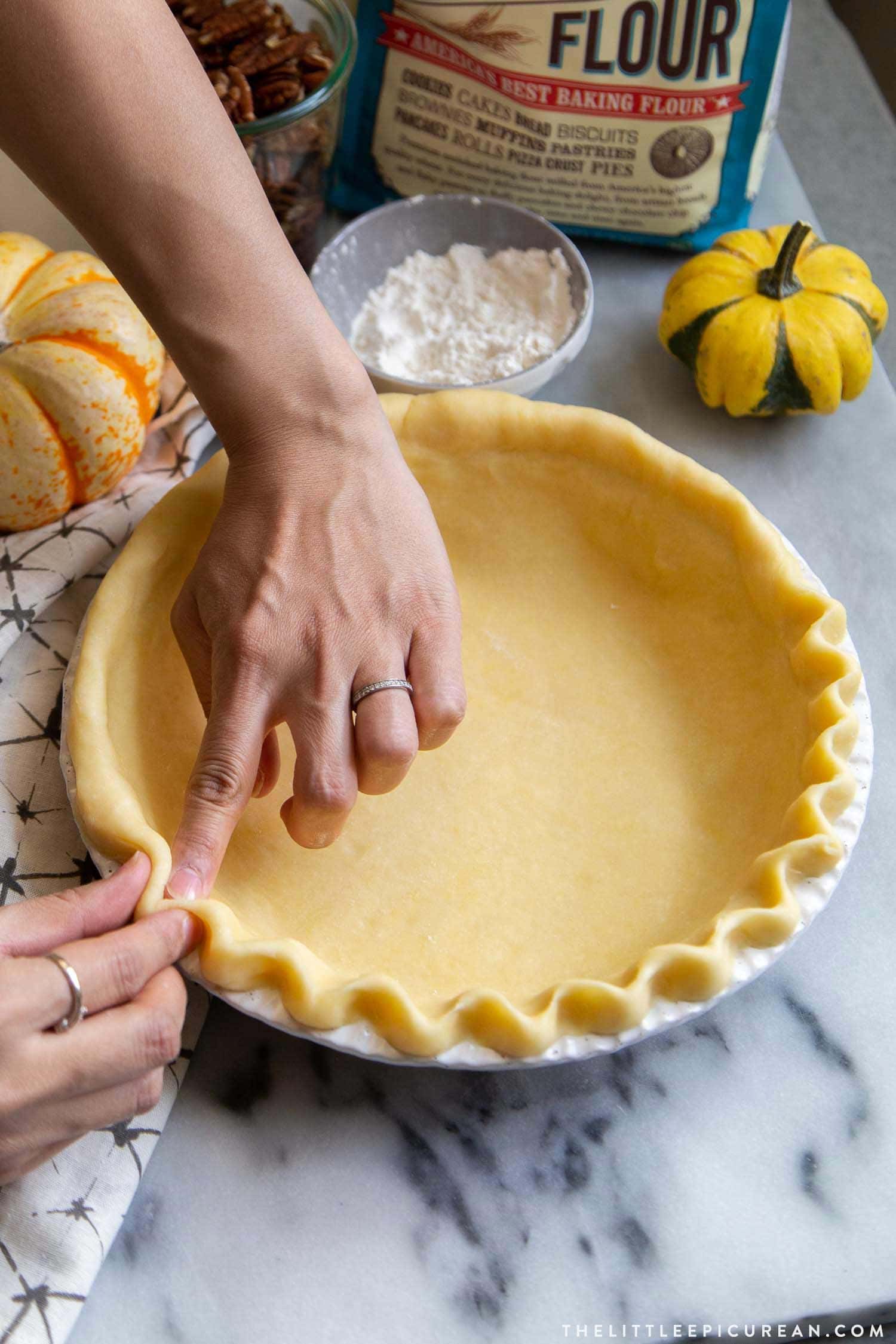
- Carefully transfer the dough to a 9-inch pie plate, gently pressing it into the bottom and up the sides. Trim excess dough, leaving about ½-inch overhang all around the rim.
- Crimp, flute, or decorate the edges as desired. Cover with plastic wrap and refrigerate for 10-15 minutes while the oven preheats.
Par-Baking (Blind Baking):
- Preheat oven to 375°F. Remove chilled pie crust from refrigerator and remove plastic wrap. Line the crust with parchment paper and fill with pie weights, dried beans, or uncooked rice.
- Par-bake for 10 minutes. Remove parchment and weights. Return pie crust to oven and bake for another 5 minutes. Remove from oven and let cool while you prepare the filling. Reduce oven temperature to 350°F.
Filling and Final Baking:
- Roughly chop 1 cup of the pecans. Scatter the chopped pecans evenly over the bottom of the par-baked pie crust. Set aside.
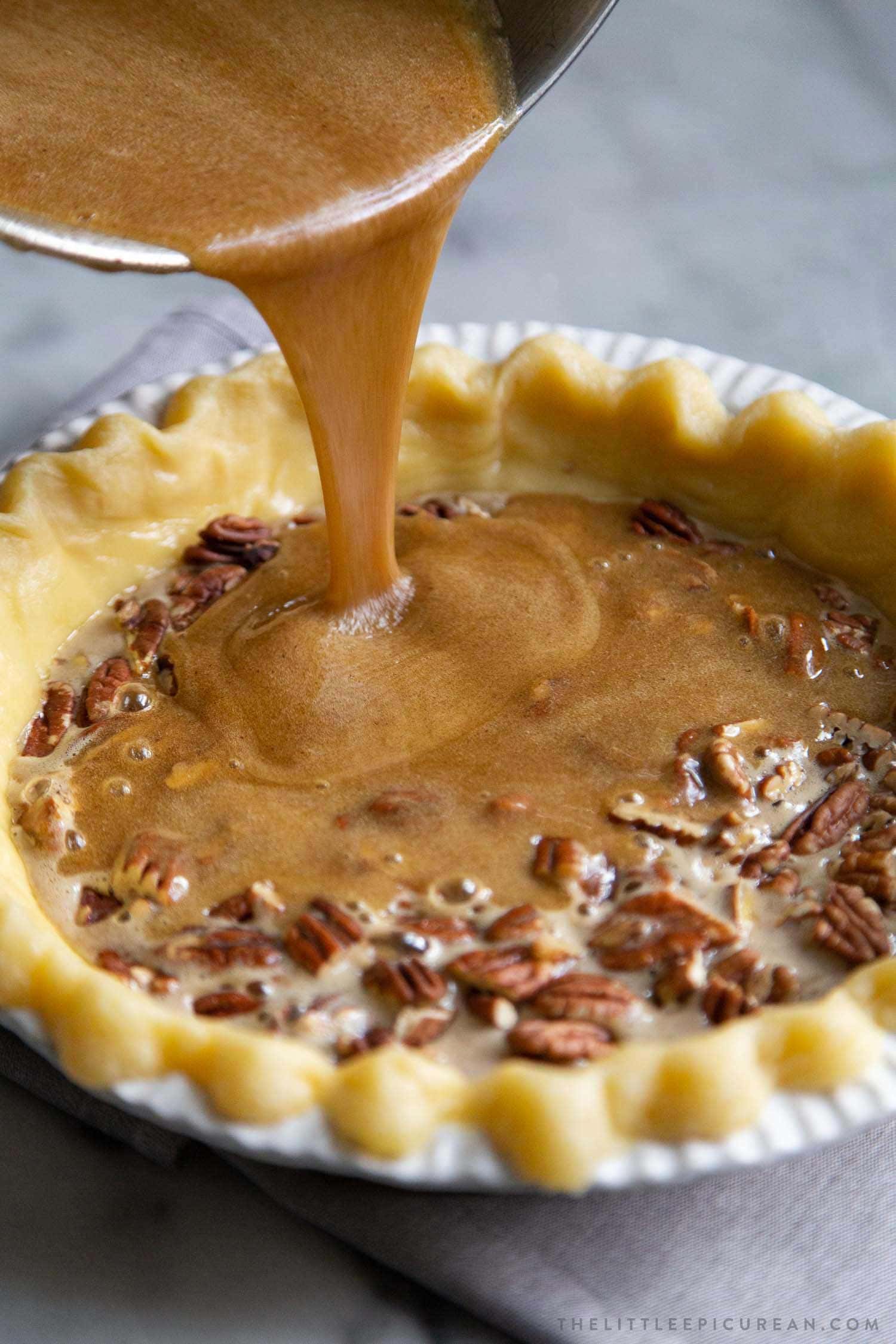
- In a large mixing bowl, whisk together granulated sugar, brown sugar, corn syrup, eggs, salt, vanilla extract, and the cooled brown butter until smooth and well combined. Pour this mixture over the chopped pecans in the crust.
- Arrange the remaining ½ cup pecan halves decoratively over the top of the filling.
- Bake at 350°F for 30 minutes. Remove from oven and place a pie crust shield (or a ring of aluminum foil) around the edges to prevent the crust from browning too quickly.
- Return to oven and bake for another 15-20 minutes, until the pecan topping is deeply toasted and fragrant and the filling has a slight jiggle in the very center but is set around the edges.
- Remove from oven and place on a wire cooling rack. Let cool completely to room temperature before slicing (at least 4 hours, overnight is ideal). The filling will set as it cools.
Notes
- Pie dough recipe makes enough for two single crust pies or one double crust pie. Store extra portion in the refrigerator for up to 2 days or keep in the freezer for up to a month. Defrost frozen dough in the fridge overnight before using.
- Use a store-bought pie crust shield to protect the crust edges from over-browning, or create your own shield from aluminum foil by cutting out a circle in the center of a square of foil.
- Don’t substitute other liquid sweeteners (honey, agave, maple syrup) for the corn syrup. The filling won’t set properly.
- Light vs. dark corn syrup: Both work, but light corn syrup lets the brown butter flavor shine more. Dark corn syrup adds molasses notes and deeper color.
- Room temperature: Store in an airtight container for up to 2 days
- Refrigerated: Store covered for up to 4 days (bring to room temperature before serving)
- Freezing: Not recommended
Nutrition
Nutrition information is automatically calculated, so should only be used as an approximation.
 Like this recipe? Rate & comment below!





Is this pie meant to be baked in a regular 9 inch or deep dish 9 inch pie plate? and does it require a ceramic or glass pie? Would metal work better?
Regular 9-inch pie plate. I prefer metal pie plates, but this recipe works for ceramic, glass, or metal. Here’s how the bottom crust looks like when you use a metal pan: https://www.instagram.com/p/DRKVuJ6ES70/
Hello! Can this pie be made in advance and/or frozen?
I have not tried freezing this pie. However, you can bake the pie two days in advance before serving.