
Learn how to make champorado, the beloved Filipino chocolate rice porridge. This comforting breakfast dish is ready in just 30 minutes with simple ingredients.
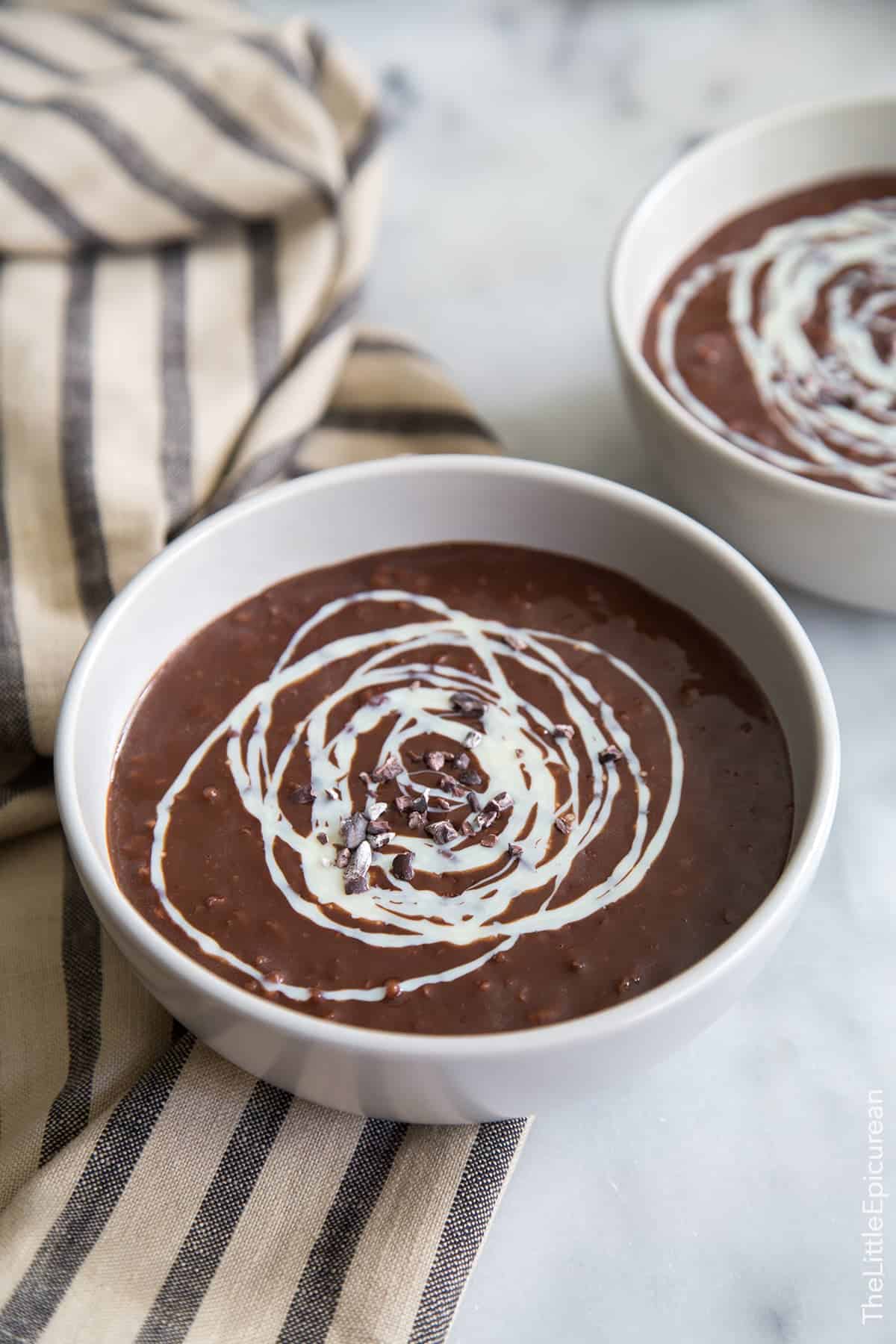
The Ultimate Comfort Food: Filipino Chocolate Rice Porridge
Champorado is the Filipino breakfast that makes chocolate for the first meal of the day completely acceptable—and even traditional. This Filipino chocolate rice porridge transforms glutinous rice into a warm, velvety bowl of comfort that tastes like childhood memories and feels like a hug from your lola (grandmother).
I’ve made countless batches of champorado—from my childhood kitchen and now for my own family. This recipe captures the authentic flavors I grew up with while making the dish accessible to anyone craving this iconic Filipino comfort food.
Why you’ll love this champorado:
- Ready in 30 minutes – faster than most breakfast recipes
- Only 6 core ingredients – simple pantry staples
- Naturally gluten-free – despite the name “glutinous rice”
- Endlessly customizable – sweet, savory, or somewhere in between
- Make-ahead friendly – tastes great warm or chilled
What is Champorado?
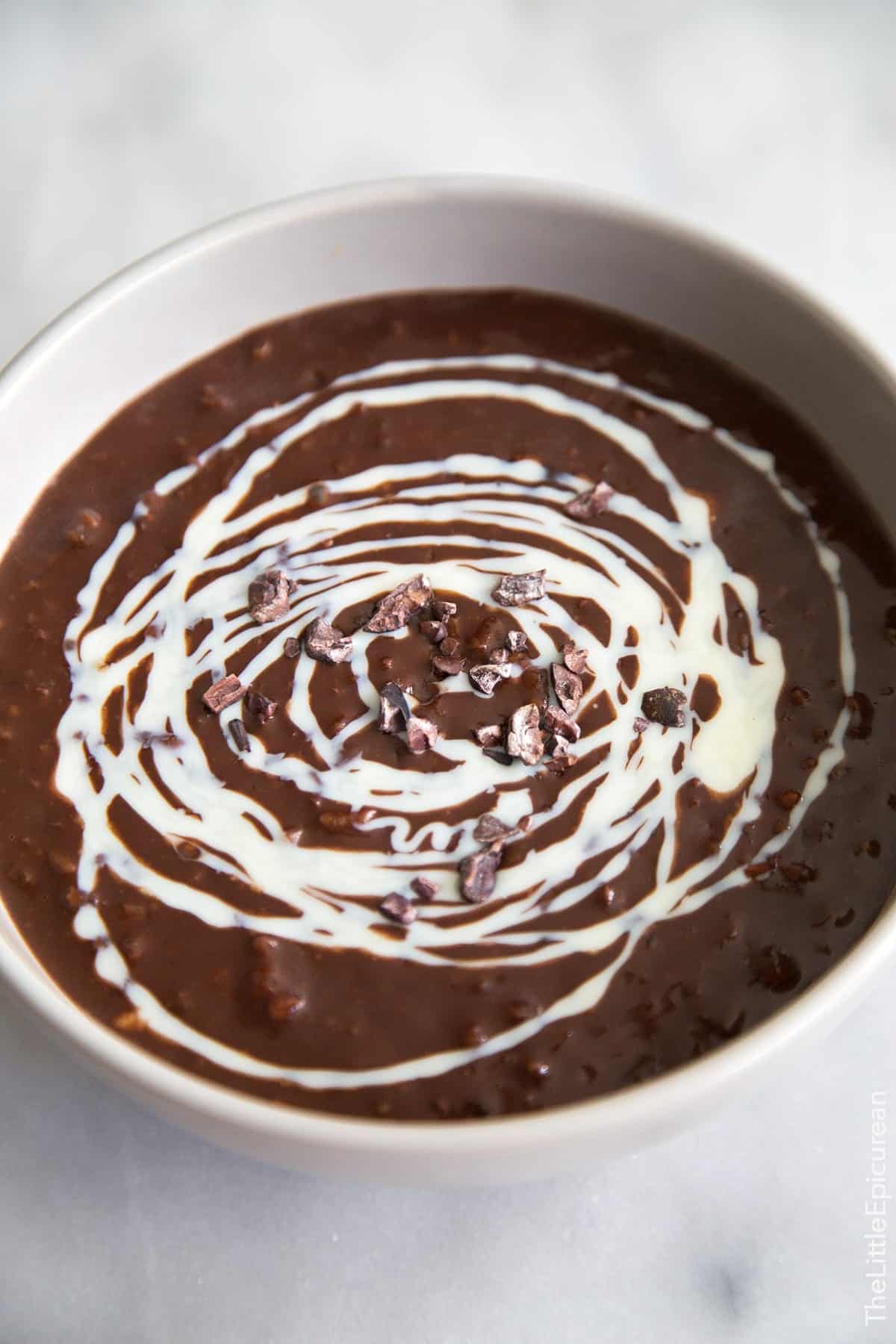
Champorado (also spelled “tsampurado“) is a traditional Filipino chocolate rice porridge made with glutinous rice, dark chocolate or cocoa, and sugar. The dish has Spanish-Mexican origins dating back to the colonial period, adapted from Mexican champurrado but made uniquely Filipino through local ingredients and serving traditions.
The Traditional Way: Chocolate Rice with Salted Fish
Here’s where champorado gets interesting: it’s traditionally served with tuyo (dried salted fish). Yes, you read that right—chocolate porridge paired with salty dried fish.
The combination might sound bizarre to Western palates, but it’s a classic Filipino flavor pairing that balances sweet, salty, and umami. The rich dark chocolate complements the intense saltiness of preserved fish, creating a surprisingly harmonious breakfast.

My take? As a kid, the fish kept me from enjoying champorado as often as I wanted. These days, I appreciate the traditional pairing but also love champorado on its own or with pandesal (Filipino bread rolls)—which I discovered during my culinary study abroad in the Philippines.
If you’re new to champorado, start without the fish and work your way up to the traditional experience!
Is Champorado Sweet?
Despite being made with chocolate, champorado is not overly sweet. The dish showcases the complex, slightly bitter notes of dark chocolate rather than candy-bar sweetness.
The magic happens when you add your toppings. Most Filipinos drizzle sweetened condensed milk over their champorado, which adds creaminess and sweetness to each spoonful. You control the final sweetness level based on how much milk you add and which type you choose.
Think of the base champorado as a blank canvas—like oatmeal—that you customize to your taste preferences.
Key Ingredients
Glutinous Rice (Malagkit)
The foundation of champorado is glutinous rice, also called sweet rice, sticky rice, or malagkit in Tagalog.
Important clarification: Despite the name, glutinous rice contains NO gluten. It’s naturally gluten-free! The term “glutinous” refers to the rice’s sticky, glue-like texture when cooked.
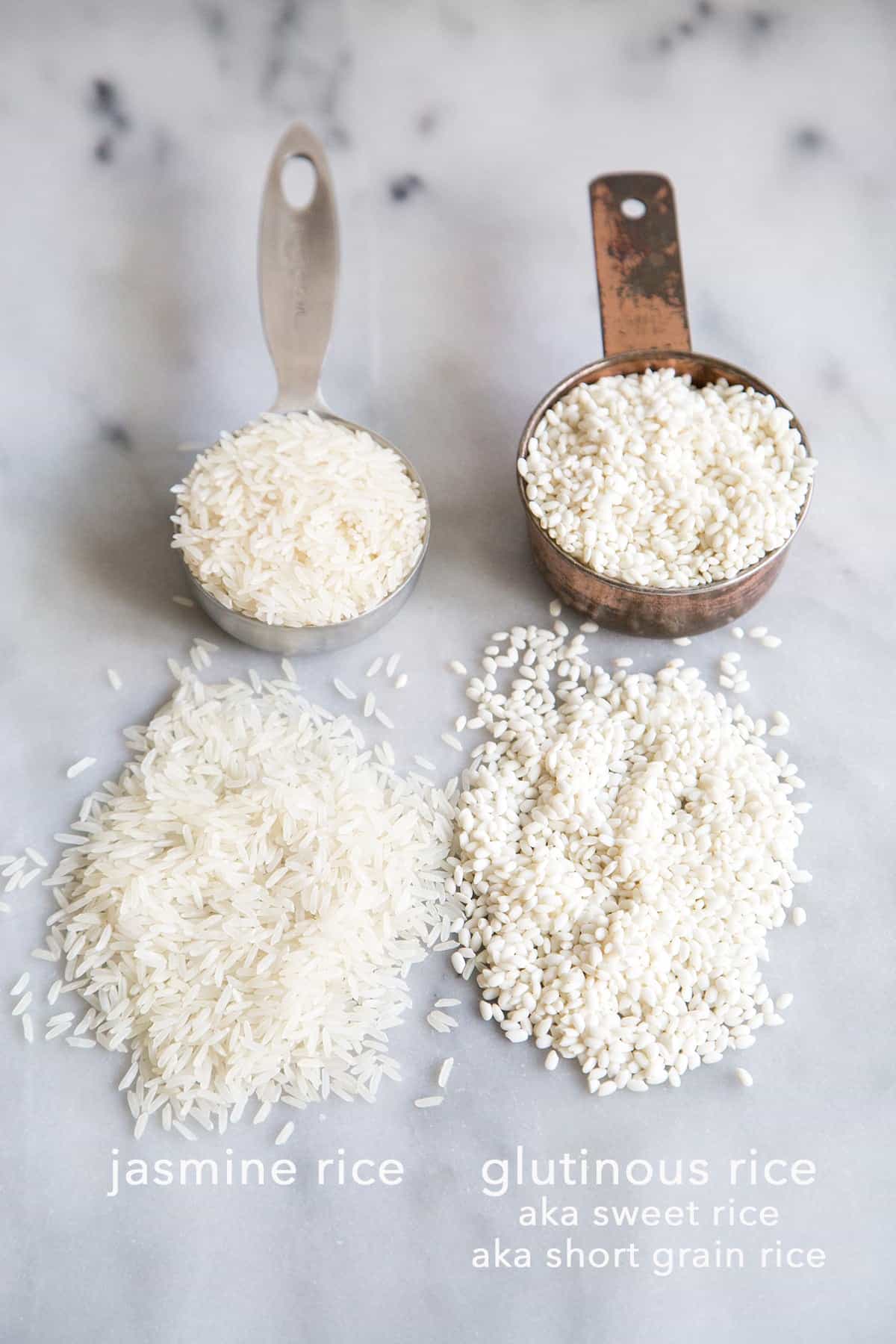
Why this rice matters: Glutinous rice is a short-grain variety with high starch content that creates the signature thick, creamy porridge consistency. Regular jasmine or long-grain rice won’t give you the same texture.
You can spot the difference visually—glutinous rice appears more opaque and chalky white compared to the translucent appearance of jasmine or basmati rice.
Where to buy: Find glutinous rice at Asian markets or in the international aisle of well-stocked grocery stores. Look for labels reading “sweet rice,” “sticky rice,” or “glutinous rice.”
Chocolate: Tablea vs. Modern Substitutes
Traditional method: Authentic champorado uses tablea (also spelled tableya)—small disks of pure, unsweetened Filipino cacao. These are the same cacao tablets used for tsokolate (Filipino hot chocolate).
Tablea delivers an intensely chocolatey, slightly bitter flavor that defines traditional champorado. Find tablea at Filipino markets, Latin markets, or online.
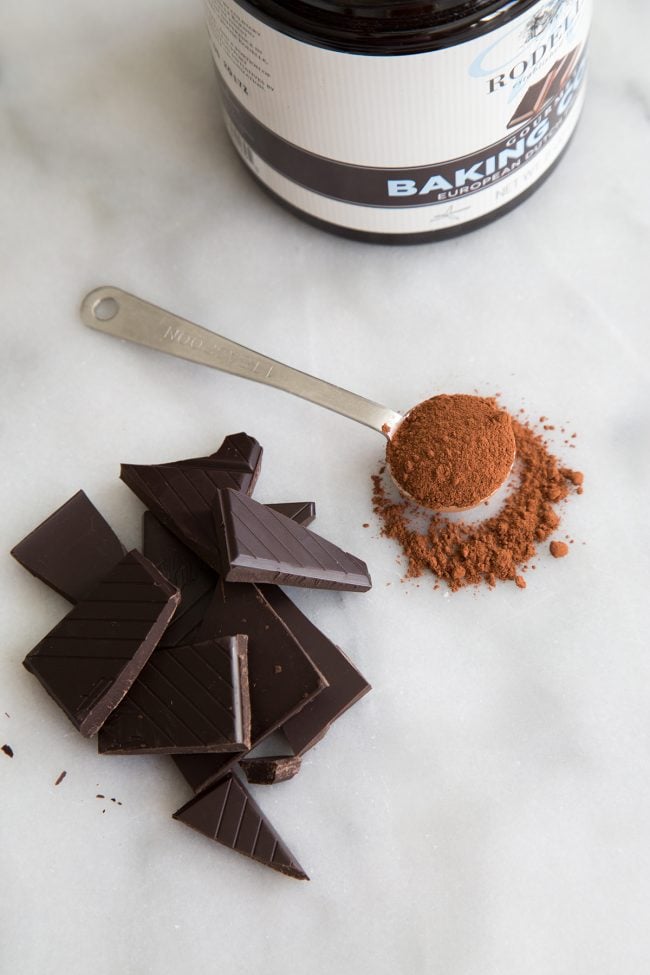
My everyday substitute: Since I don’t always have tablea on hand, I’ve perfected a combination that delivers nearly identical results:
- Dutch-processed unsweetened cocoa powder (¼ cup)
- 90% dark chocolate, chopped (3 oz)
This duo mimics tablea’s deep chocolate flavor and provides the right balance of cocoa intensity and richness. The cocoa powder dissolves easily into the porridge while the dark chocolate chunks add body and glossy texture.
Sweeteners
Dark brown sugar provides molasses depth that complements dark chocolate beautifully. The amount in the base recipe is minimal—just enough to balance bitterness—because most sweetness comes from your topping choice.
Feel free to adjust sugar based on your chocolate choice and personal preference.
Step-by-Step
Step 1: Cook the Rice
Rinse and drain your glutinous rice to remove excess starch. Combine rice, water, and a pinch of salt in a heavy-bottomed pot (this prevents scorching).
Bring to a boil over medium-high heat, then reduce to a gentle simmer. Stir every 3 minutes to prevent sticking and ensure even cooking.
Timing: The rice takes 15-20 minutes to cook through. You’ll know it’s ready when the grains are completely soft and the mixture has thickened to a porridge consistency.
Pro tip: The porridge will continue thickening as it cools, so don’t worry if it seems slightly thin at this stage.
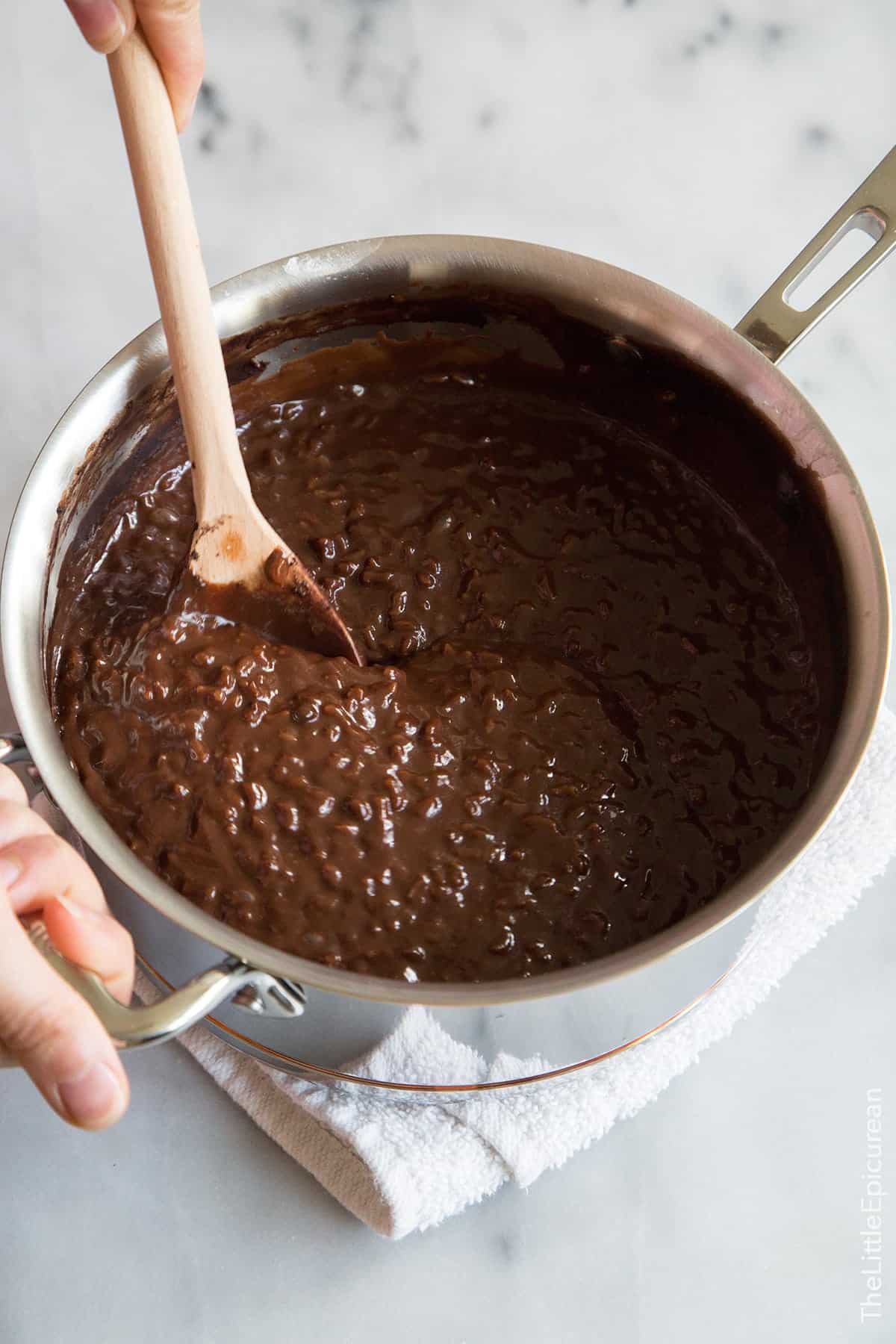
Step 2: Add the Chocolate
Once your rice is tender, reduce heat to low and add the cocoa powder, chopped dark chocolate, and brown sugar.
Stir continuously until the chocolate melts completely and the mixture turns uniformly dark and glossy. This takes just 2-3 minutes.
Watch the heat: Keep it low to prevent scorching the chocolate, which can make it taste bitter and grainy.
Step 3: Adjust Consistency
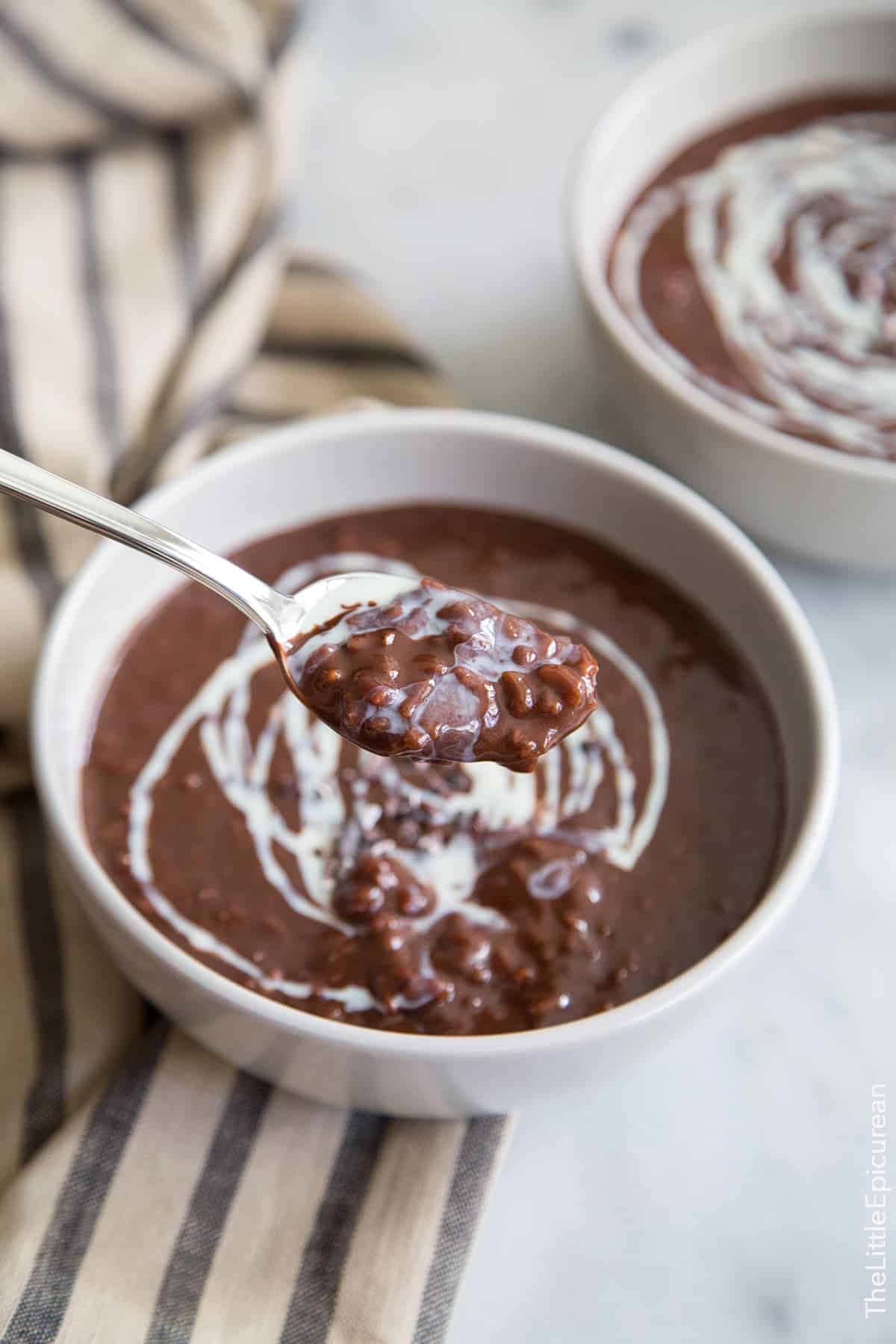
Champorado should be thick but pourable—similar to oatmeal or cream of wheat. If your porridge seems too thick, add water or milk a few tablespoons at a time until you reach your desired consistency.
Remove from heat and let it rest for a few minutes before serving.
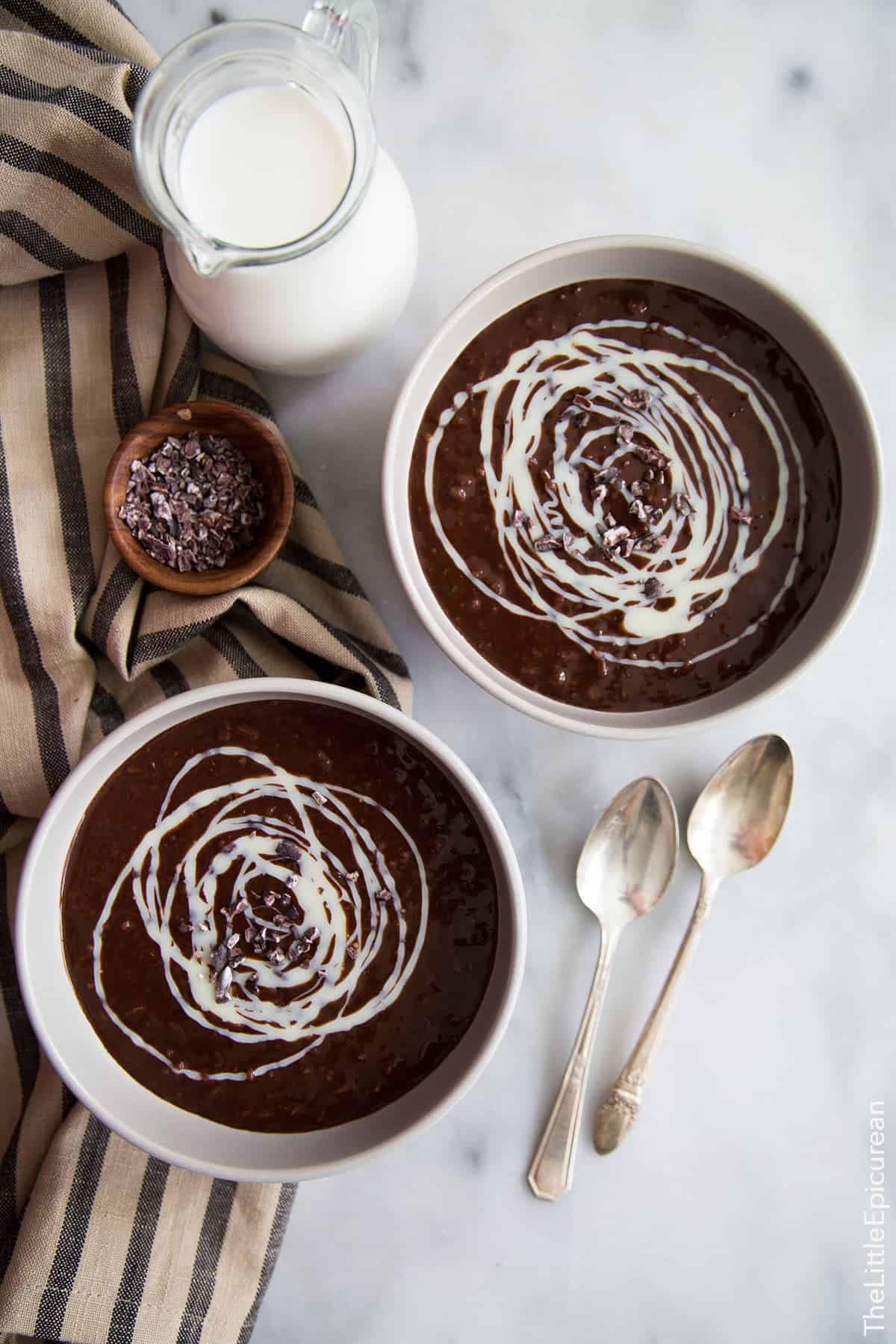
How to Serve Champorado
Traditional Toppings
- Sweetened condensed milk – The most popular choice, creating swirls of creamy sweetness
- Evaporated milk – For a less sweet, more subtle creaminess
- Fresh milk or half-and-half – Adds richness without extra sweetness
- Dairy-free options – Coconut milk, almond milk, or oat milk work beautifully
My Favorite Additions
As a pastry chef, I love adding texture and visual interest:
- Cacao nibs – Add chocolatey crunch and a slightly bitter counterpoint
- Flaky sea salt – A small pinch on top brightens all the flavors (mimics the traditional salty fish pairing without actual fish)
- Pandesal pieces – Dunk Filipino bread rolls into your champorado for textural contrast
The Traditional Pairing: Tuyo (Dried Salted Fish)
For the authentic Filipino breakfast experience, serve champorado alongside tuyo. Take alternating bites of sweet chocolate porridge and salty fish—it’s a flavor combination that grows on you with time.
If dried fish isn’t available, try bacon or salted anchovies for a similar salty-umami contrast.
Storage & Make-Ahead
Refrigerator: Store leftover champorado in an airtight container for up to 3 days.
Important note: The porridge will thicken substantially as it cools—this is completely normal due to the starch in glutinous rice.
Reheating: Warm gently on the stovetop, adding milk or water to thin it back to your preferred consistency. Microwave reheating works too—heat in 30-second intervals, stirring between each.
Serving cold: Many Filipinos enjoy chilled champorado straight from the fridge, especially in warmer weather. The cold, thick texture is reminiscent of chocolate pudding.
Freezing: Not recommended. The rice texture changes significantly when frozen and thawed.
Recipe FAQs
No, regular rice won’t create the proper thick, creamy consistency. Glutinous rice’s high starch content is essential for authentic champorado texture. Using jasmine or long-grain rice will result in a thin, soup-like dish.
Absolutely! The base recipe is already vegan (rice, water, cocoa, dark chocolate, sugar). Top with coconut milk, almond milk, or vegan condensed milk instead of dairy.
Thickness varies based on cooking time and rice-to-water ratio. Add more water or milk to thin; simmer longer to thicken. Remember that champorado continues thickening as it cools.
Look for “sweet rice,” “sticky rice,” “mochi rice,” or “malagkit” at Asian grocery stores. Online options include Amazon or specialty rice retailers. There’s no perfect substitute—glutinous rice is essential for authentic results.
Want more Filipino recipes? Visit Love, Filipino Food!
Champorado (Filipino Chocolate Rice Porridge)
Ingredients
- 1 cup glutinous rice, * (see notes), rinsed and drained
- 6 cups water
- pinch fine sea salt
- ¼ cup dutch processed unsweetened cocoa powder
- 3 oz 90% dark chocolate, roughly chopped, (85 g)
- ¼ cup dark brown sugar, packed (adjust to taste)
Topping Choices:
- sweetened condensed milk
- evaporated milk
- half & half
- dairy alternatives: almond milk, coconut milk, etc.
- cacao nibs, (for crunch)
- flakey sea salt or maldon salt, (optional)
Instructions
- Cook the rice: Combine rinsed glutinous rice, water, and salt in a heavy-bottomed pot. Bring to a boil over medium-high heat, then reduce to a gentle simmer. Stir every 3 minutes to prevent sticking. Cook uncovered for 15-20 minutes until rice is completely soft and mixture has thickened to a porridge consistency.
- Add chocolate mixture: Reduce heat to low. Add cocoa powder, chopped dark chocolate, and brown sugar. Stir continuously until chocolate melts completely and mixture is smooth and glossy, about 2-3 minutes. Remove from heat.n.
- Adjust consistency: If champorado is too thick, add water or milk a few tablespoons at a time until you reach desired consistency. It should be thick but pourable.
- Serve: Ladle champorado into bowls. Drizzle generously with sweetened condensed milk or your preferred topping. Sprinkle with cacao nibs and a pinch of flaky sea salt if desired. Enjoy warm or chilled.
Notes
Nutrition
Nutrition information is automatically calculated, so should only be used as an approximation.
 Like this recipe? Rate & comment below!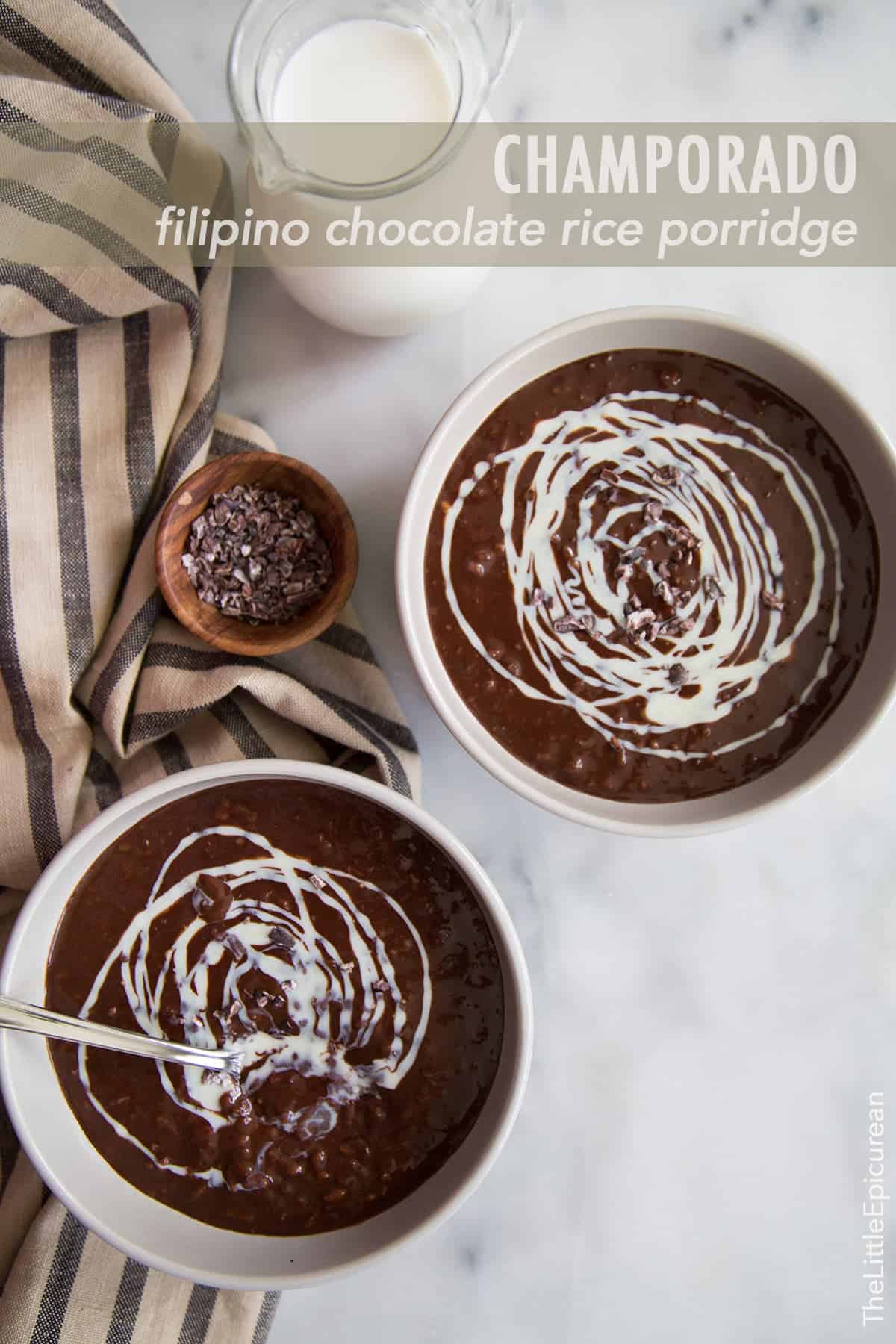





Hello! Just wondering which region in the Philippines you or your parents are. I am of Filipino descent, born, raised, educated (and will probably die there, too! ) and as such, your spelling of sticky rice, ‘malakit’, is different from what I have learned in school which is ‘malagkit’. You may google translate it to see which one of us is right. Hope this helps.
You are missing out on such a treat if you skip out on the dried fish! The dried salted and smoked herring provides the perfect contrast to the sweet richness of this pudding. We the dried fish needs to be fried to a crisp and you only eat the thin slivers of fish meat that lay hidden under a sheath of fish skin– it’s delectable, I promise you. A must try.
I would have been in the same boat as you when it came to the fish… otherwise it sounds SO good!
This looks incredibly delicious. My son is a huge rice pudding fan so I think I’ll have to surprise him with this. He’ll be in heaven!
I so want this for breakfast! What a decadent way to start your day!
Oh my WORD, this looks and sounds absolutely stunning! I’ve never heard of Champorado (or the dried fish clause!), but I could definitely be down for a giant bowl of this tomorrow morning. So good!
What an interesting breakfast! I am part filipino but I’ll admit I wasn’t exposed to too many traditional dishes. Lumpia and adobo are popular in our home but I really need to branch out and try some more!
I could eat this all day!
Chocolate for breakfast is always a great idea! My family would love me if they woke up to this!
hmm. not so sure about the salted fish. completely game for salted fish in clay pots and fried rice, but maybe not with chocolate! this sounds so comforting: anything warm and starchy (ooooo thai sticky rice and sweet red bean soup) is up my alley!
Salted fish with champurrado is very traditional for Filipinos! A salty side is necessary to balance the sweetness.