
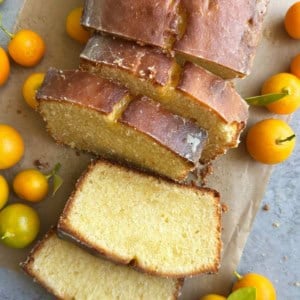
This is the buttery, citrus forward pound cake flavor you didn’t know you needed! Super moist and flavorful calamansi pound cake encased in thin smooth glaze.
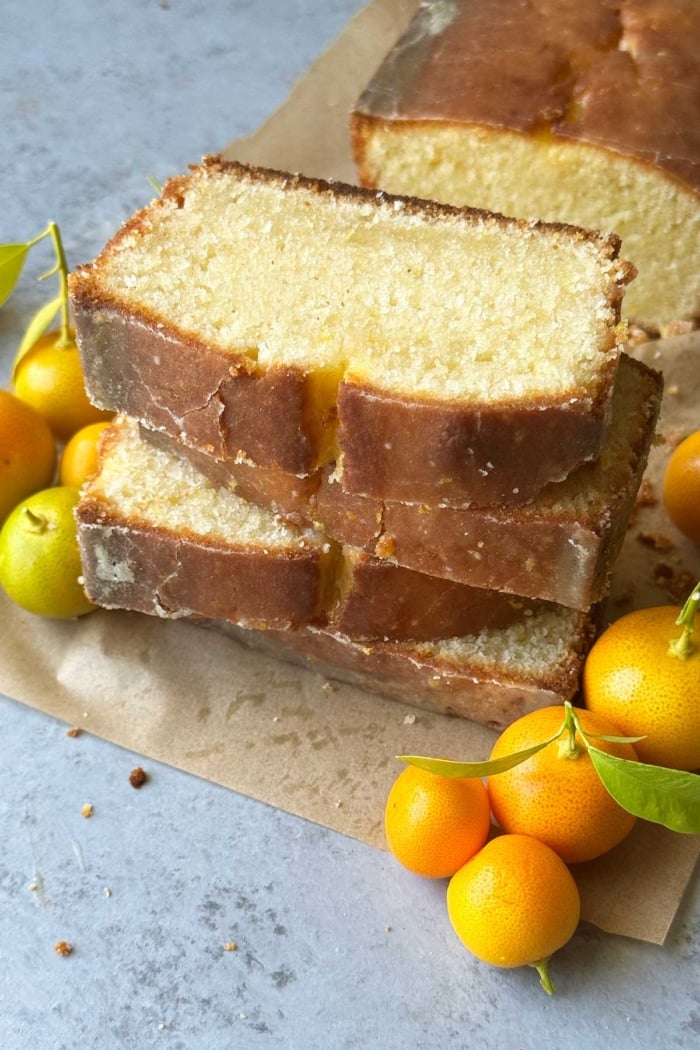
If you or someone you know has a Calamansi tree in the backyard, you know the struggle! These tiny citrus fruit grows like wildfire and once the tree starts fruiting, you constantly need to find ways to use them. That’s how this recipe was born.
But, even if you don’t have a tree, this recipe still works beautifully with frozen calamansi juice. It will taste just slightly different (more on that below)
Calamansi (or kalamansi)
Calamansi is a small citrus fruit native to Southeast Asia and a staple in Filipino cooking. It looks like a tiny lime but tastes like a cross between a lime and a mandarin orange. It’s all at once tart, floral, and deeply fragrant.
Calamansi has many uses: it’s squeezed over pancit, stirred into sawsawan, and mixed into refreshing juice. But it deserves a starring role in baking, too.
Nod to Classic Pound Cake
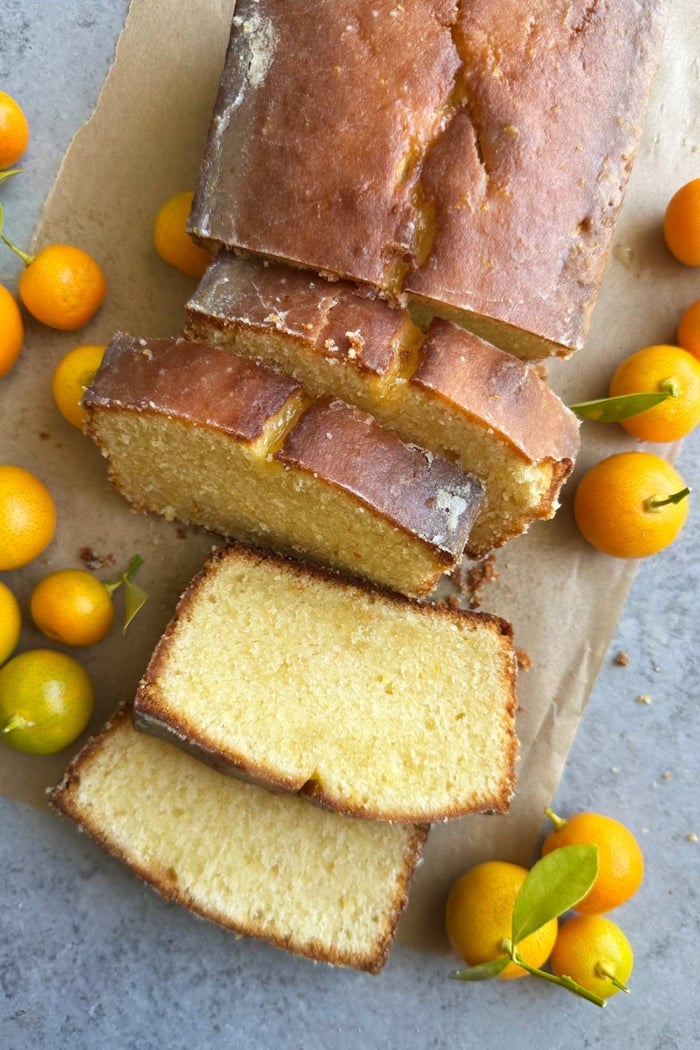
This recipe loosely follows the traditional pound cake formula of equal parts butter, sugar, flour, and eggs. That ratio produces a rich, dense, and buttery cake that’s satisfying without being complicated.
Don’t be alarmed by the super thick batter, that’s totally normal! It will be noticeably thick. That’s exactly what you want. That density gives the pound cake its tight, velvety crumb that stays moist for several days.
Fresh vs Frozen Calamansi Juice
I made this recipe several times to figure out whether it’s really worth it to source fresh calamansi fruit.
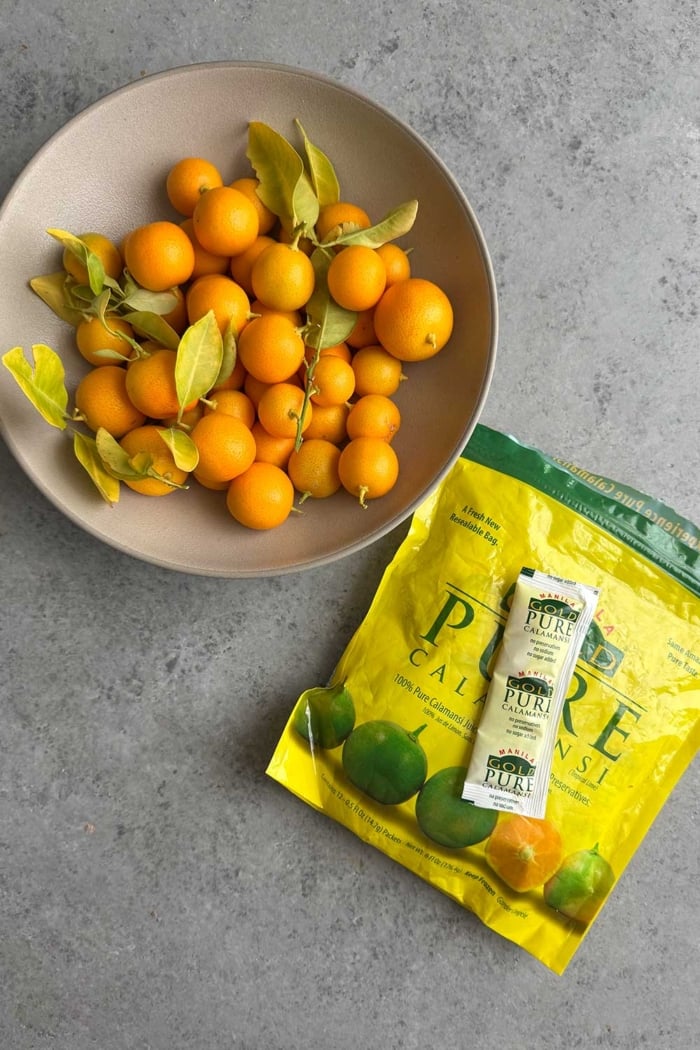
The verdict? Both are genuinely delicious. The calamansi flavor came through in both versions in both. Where the fresh version had a slight edge was in aroma and a little extra brightness (and that’s largely thanks to the addition of fresh calamansi zest rubbed into the granulated sugar before mixing). That extra step really unlocks the oils in the zest and takes the flavor to another level.

Here’s the bottom line:
- Fresh calamansi (with zest!) = more aromatic, brighter notes, more complex flavor
- Calamansi packets = super convenient, still flavorful, great everyday option
Use whichever option you have access to! The cake will turn out great either way.
Baking Tips
- Room temperature ingredients matter. Make sure your butter and eggs are fully at room temperature before you start. This ensures everything creams and emulsifies properly, which is key for a smooth, even batter.
- Don’t skip the zest step (if using fresh). Rubbing the zest into the granulated sugar before creaming it with the butter makes a real difference. The sugar acts as an abrasive that draws out the fragrant oils, giving you a more intensely flavored cake.
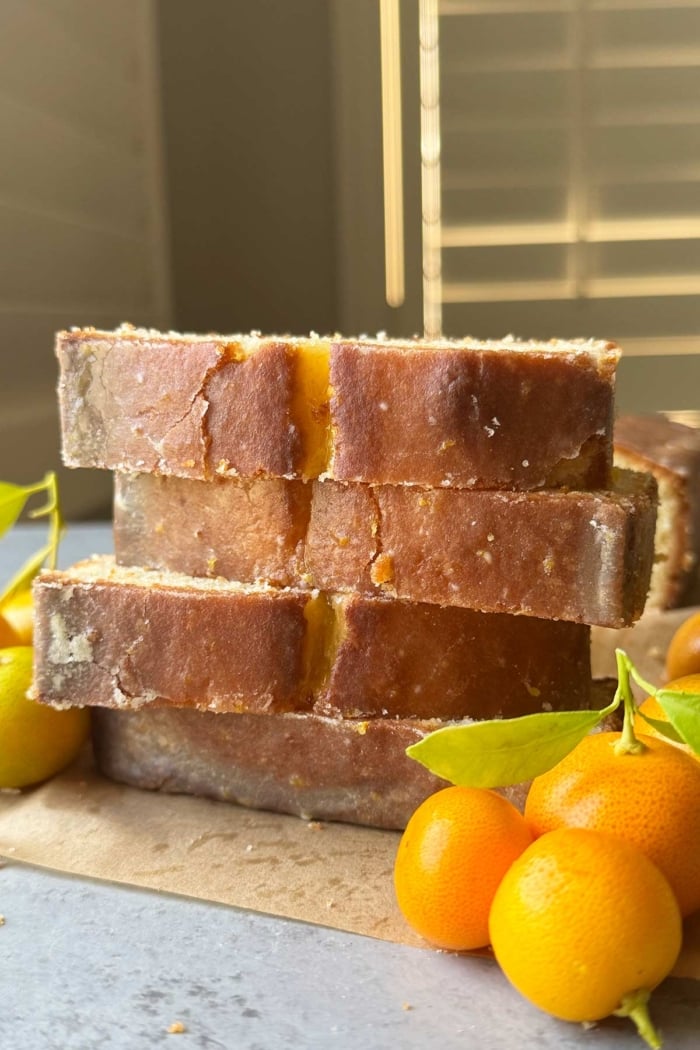
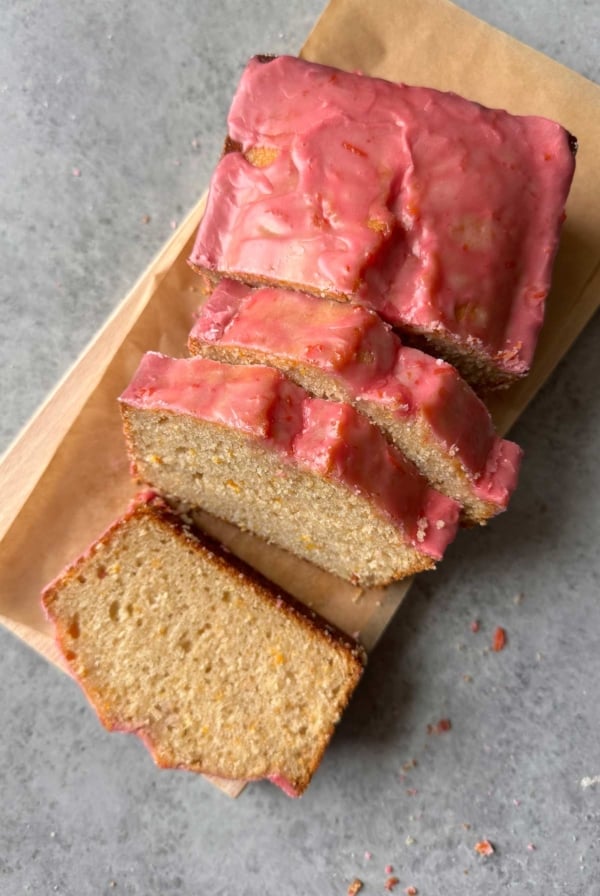
- Glaze warm cake! I know, this is probably against what you’re used to. Glaze the cake while warm so it can soak in. The sweet and tart coating sets into a delicate crust as it cools.
Calamansi Pound Cake
Ingredients
- 200 g all-purpose flour (1 ½ cup)
- 1 ½ teaspoon baking powder
- ½ teaspoon kosher salt
- 226 g unsalted butter (1 cup), softened, room temp
- 200 g granulated sugar
- 1 Tablespoon calamansi zest, optional, highly recommended, add more to taste
- 2 large eggs, room temp
- 3 Tablespoons calamansi juice (45 g), *
- 60 g sour cream (¼ cup), room temp
Icing Glaze
- 21 g unsalted butter (1 ½ Tablespoon), melted, hot
- 60 g confectionary sugar (about ½ cup), powdered sugar
- 1 teaspoon calamansi zest, optional, highly recommended,
- 2 Tablespoon calamansi juice (30 g)
- pinch kosher salt
Instructions
- Preheat oven to 350℉. Butter and sugar standard one pound loaf pan (9×5 or 9X4-inch). Tap out excess sugar. Set aside.
- Whisk together flour, baking powder, and salt in medium bowl. Set aside.
- In the bowl of a stand mixer, rub calamansi zest (if using) and granulated sugar together to extract flavor. Add in softened butter. Secure paddle attachment to stand mixer. Beat together until well combined.
- With the mixer running on medium speed, add eggs one at a time.
- Add half of flour mixture. Briefly mix on low speed. Add in calamansi juice and sour cream. Beat until well combined. Add remaining flour and mix on low speed until there are no longer any dry streaks of flour. Scrape down sides and bottom of bowl as needed to ensuring thorough mixing.
- Transfer batter to prepared loaf pan. Spread into an even layer. Bake for 50-60 minutes until cake springs back to touch and toothpick inserted in center of cake comes out clean.
- Cool in pan for 5-10 minutes and prepare glaze. Run mini offset spatula along the edges of the pan. Invert cake or pull cake out of loaf pan.
Glaze:
- Mix together the hot melted butter and powdered sugar (and if using zest) until a smooth paste forms. Add the calamansi juice a little at a time, stirring until fully incorporated. Season with a pinch of salt.
- Using a pastry brush, apply the glaze over the warm cake in stages, making sure to coat the edges.
- Let the cake cool completely to room temperature. As it cools, the glaze will set into a delicate, lightly crisp crust. Slice with a serrated knife and serve.
Notes
Nutrition
Nutrition information is automatically calculated, so should only be used as an approximation.
 Like this recipe? Rate & comment below!





👌