
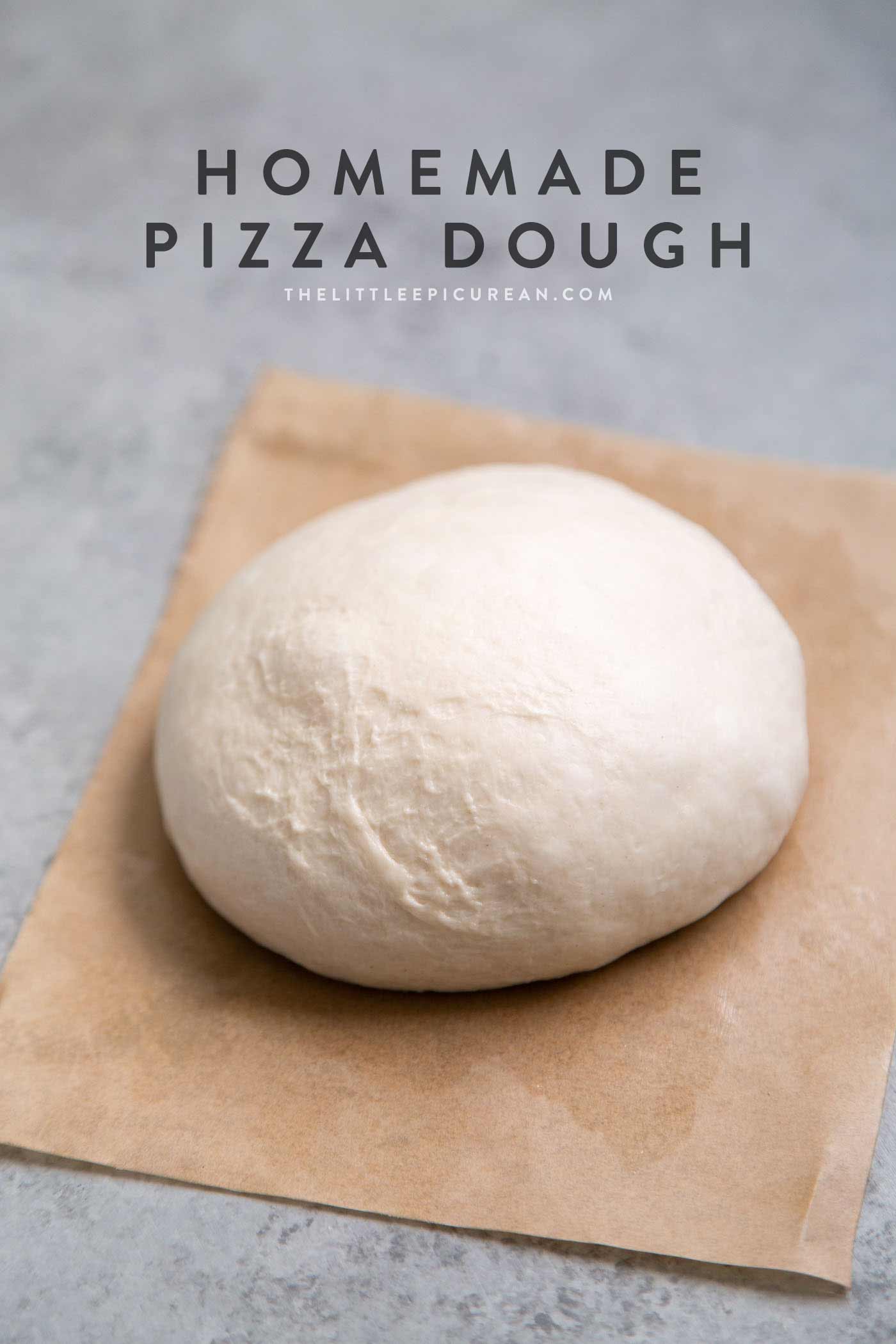
Learn how to make easy homemade pizza dough from scratch with simple ingredients. This chewy, freezer-friendly pizza dough works every time!
Yeasted doughs can be intimidating. If you’re a little hesitant to work with yeast, start by reading this beginners guide to baking with yeast.
Pizza night just got a serious upgrade! This easy homemade pizza dough comes together with simple ingredients. I make yeasted doughs weekly, and this is genuinely one of the most approachable ones out there. Once you make pizza dough from scratch, you’ll have a hard time going back to the store-bought stuff.
If you’re still not ready to make pizza dough from scratch, try this two-ingredient pizza dough! It’s a simple mixture of self-rising flour and Greek yogurt.
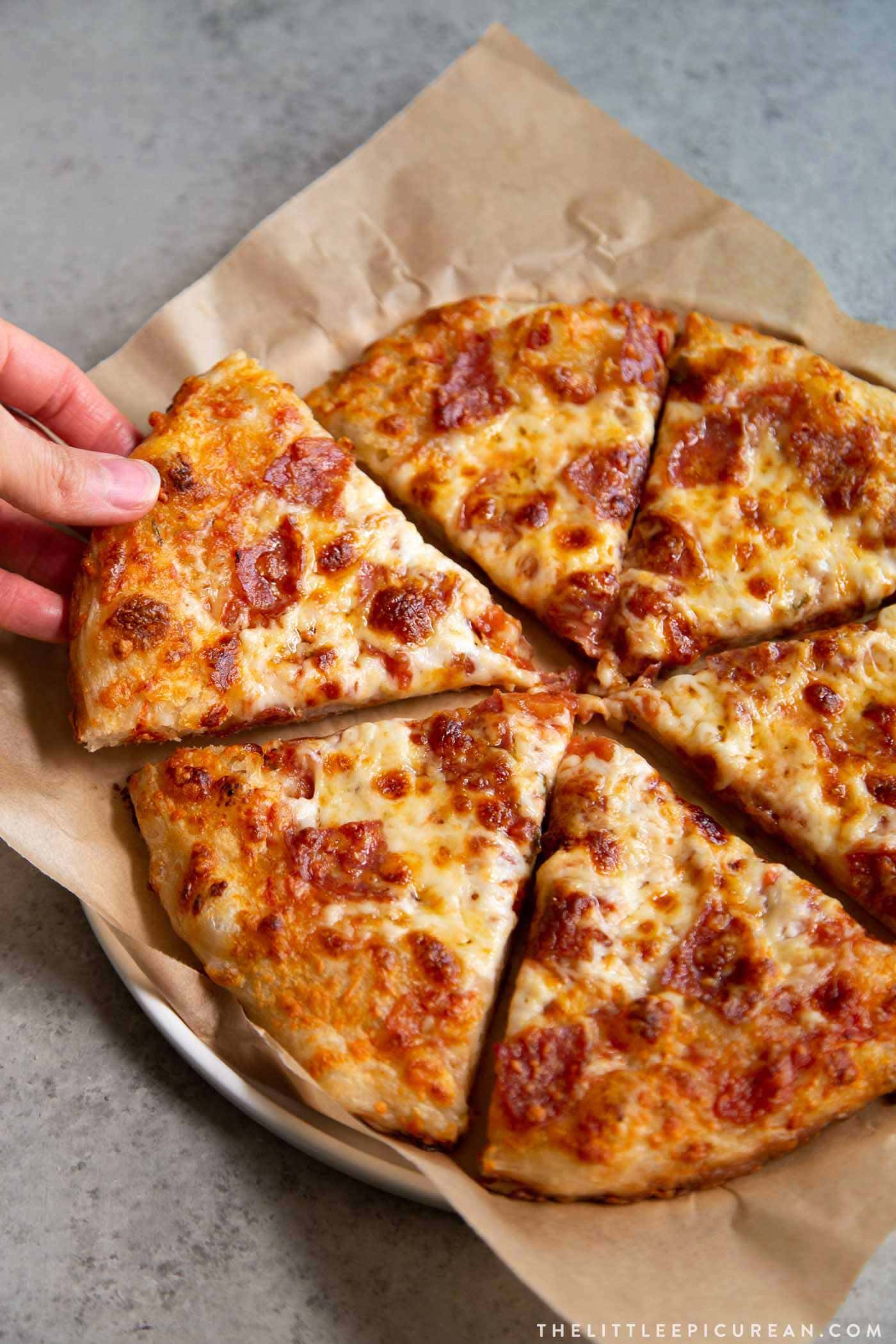
Who doesn’t love pizza? It’s safe to say that pizza is a universally loved food.
Pizza is easy to customize and adapt to anyone’s tastes and preferences. From gluten-free pizza to vegan pizza to meat lovers pizza, there is a pizza for everyone!
Make this recipe because:
- Only 5 ingredients (plus water)
- Works with all-purpose flour, bread flour, or a combination of both
- Freezer-friendly: make ahead and store for up to 3 months
- Versatile dough perfect for cast iron pizza, sheet pan pizza, calzones, and flatbreads
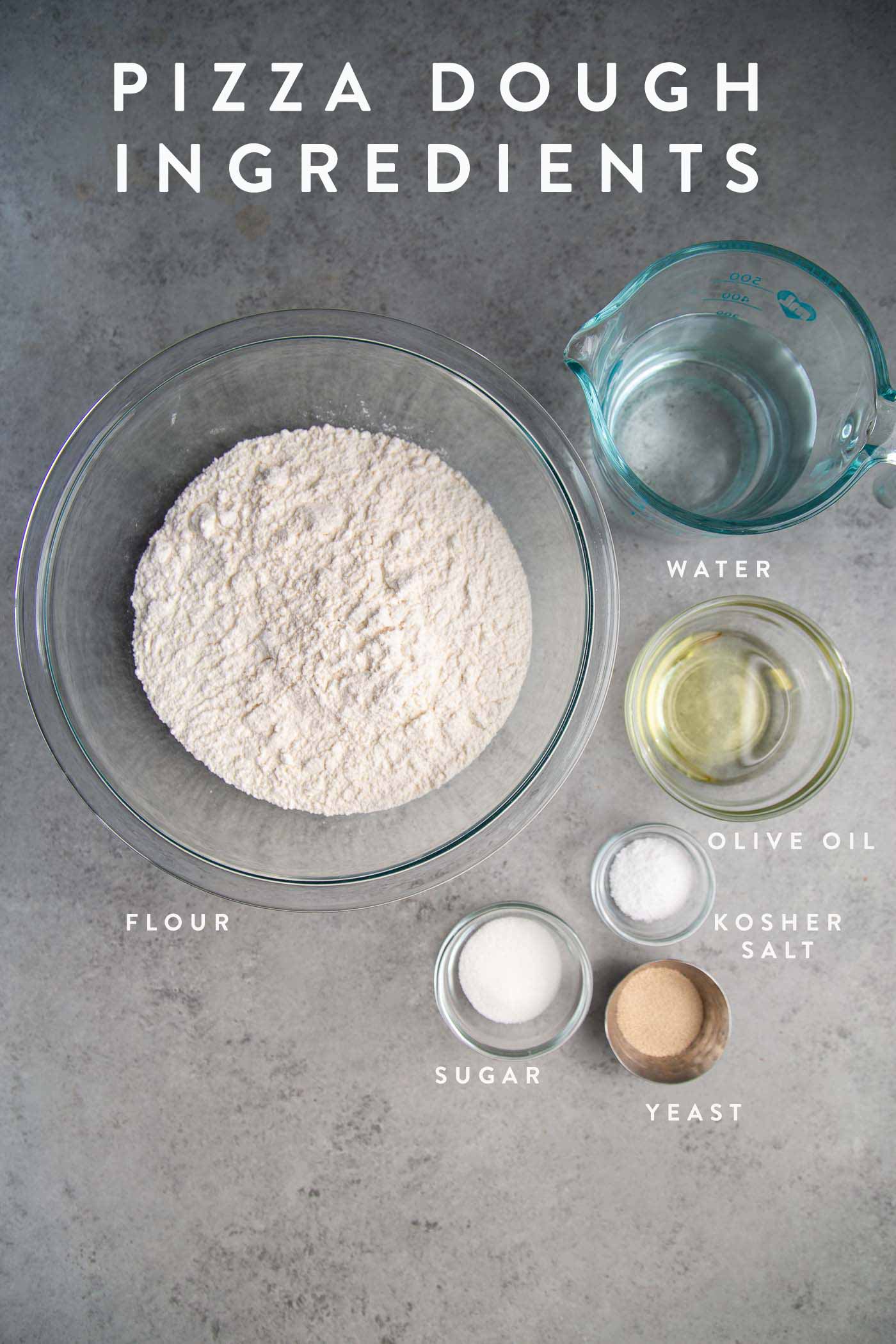
Ingredients
Flour :: This recipe works with all-purpose flour, bread flour, or a blend of both. I prefer using a combination because you get the best of both worlds.
- Bread flour has a higher protein content, which means more gluten development. This gives the dough its characteristic chew and elasticity. Baked dough will rise slightly higher and have a fluffier interior.
- All-purpose flour is lower in protein, making the dough a little easier to stretch and shape.
- If you only have one type of flour on hand, use 3¾ cups (488g) of either bread flour or all-purpose flour. Both work well. Just know that the texture of the finished crust will vary slightly.
Water :: Use tap or filtered water. The temperature matters! . Yeast is a living organism, and it needs warm (not hot!) water to activate. Aim for 100–110°F. Too cold and the yeast won’t wake up. Too hot and you’ll kill it.
Olive Oil :: Use good quality cooking olive oil or extra-virgin olive oil. Stay away from finishing or drizzling olive oils. Those have a lower smoke point and can taste bitter after being placed in a hot oven.
Sugar and Salt :: The small amount of sugar isn’t there to sweetened the dough. It’s food for the yeast! Sugar gives the yeast a jumpstart so it activates quickly. Don’t skip the kosher salt. Salt gives flavor.
Yeast :: Use either active dry yeast or instant yeast. Both work in this recipe; the method differs slightly.
- To use instant yeast, simply mix the yeast with the dry ingredients. The instant yeast does not need to be dissolved or activated in water ahead of time.
- To use active dry yeast, dissolve yeast in warm water with 1 tsp of granulated sugar for 5 to 7 minutes until foamy and fragrant.
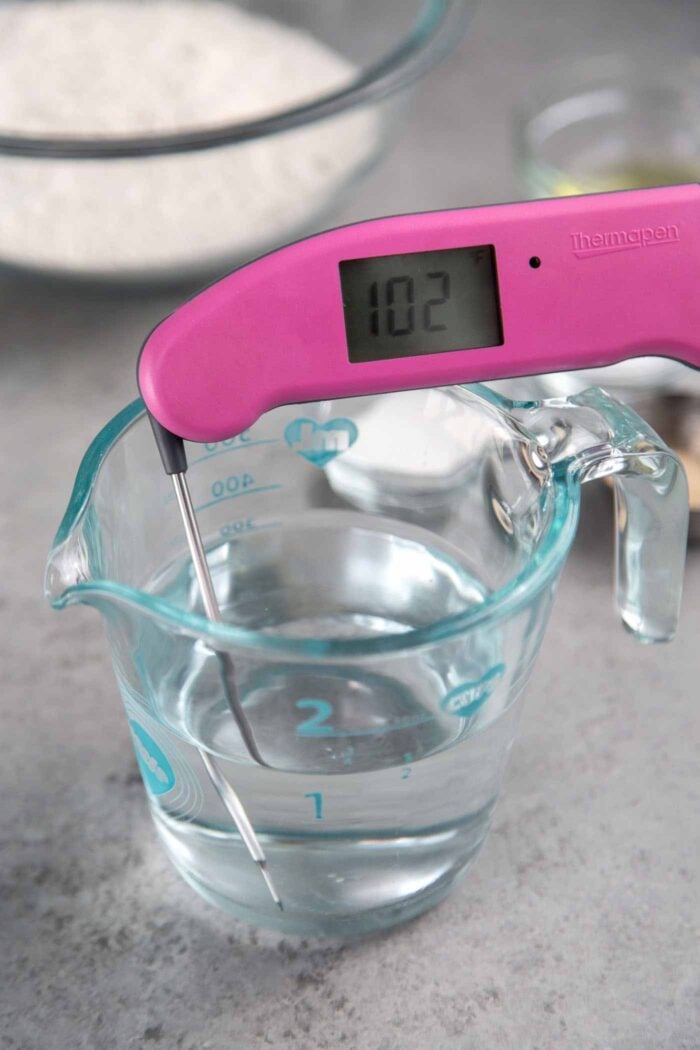
Key Tool: Digital Thermometer
Use a digital kitchen thermometer! I personally use this Thermoworks Thermapen. I bought mine in pink so it doesn’t get lost in the kitchen drawer. (Highly recommend this color strategy!)
A digital thermometer will provide the most accurate readings. This will ensure the water is the right temperature to wake up the yeast.
Water temperature is the single most critical factor in activating yeast correctly. If you make breads often, over time you will be able to gauge water temperature using your fingers. But until then, I highly recommend using a digital kitchen thermometer.
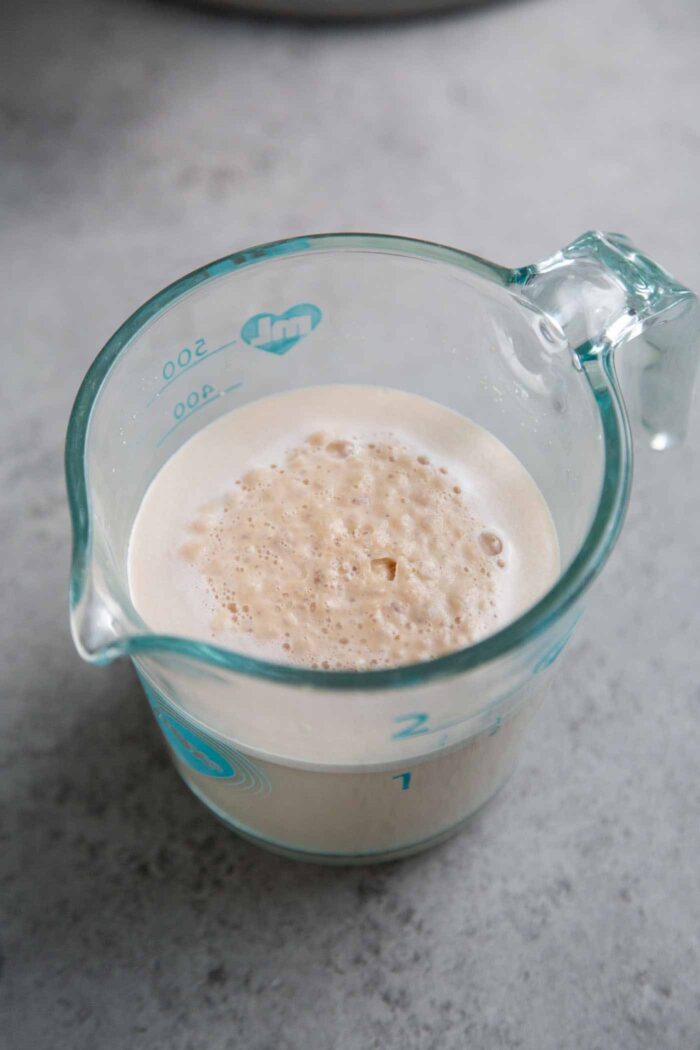
How to Test if Your Yeast is Still Good
If your jar or packet of yeast has been sitting around for a while, it’s a great idea to test it before making dough.
Dissolve 2¼ teaspoons of yeast in ½ cup of warm water (around 110°F) with 1 teaspoon of sugar. Stir and wait 7 minutes.
- Active, healthy yeast will bubble up, foam, and smell yeasty (almost like beer).
- Dead or expired yeast will sit completely flat with no activity.
If nothing happens after 7 minutes, toss the yeast and buy a fresh packet. Starting over with fresh yeast is much better than working through an entire batch of dough only to end up with a sad, dense crust. Trust me on this one.
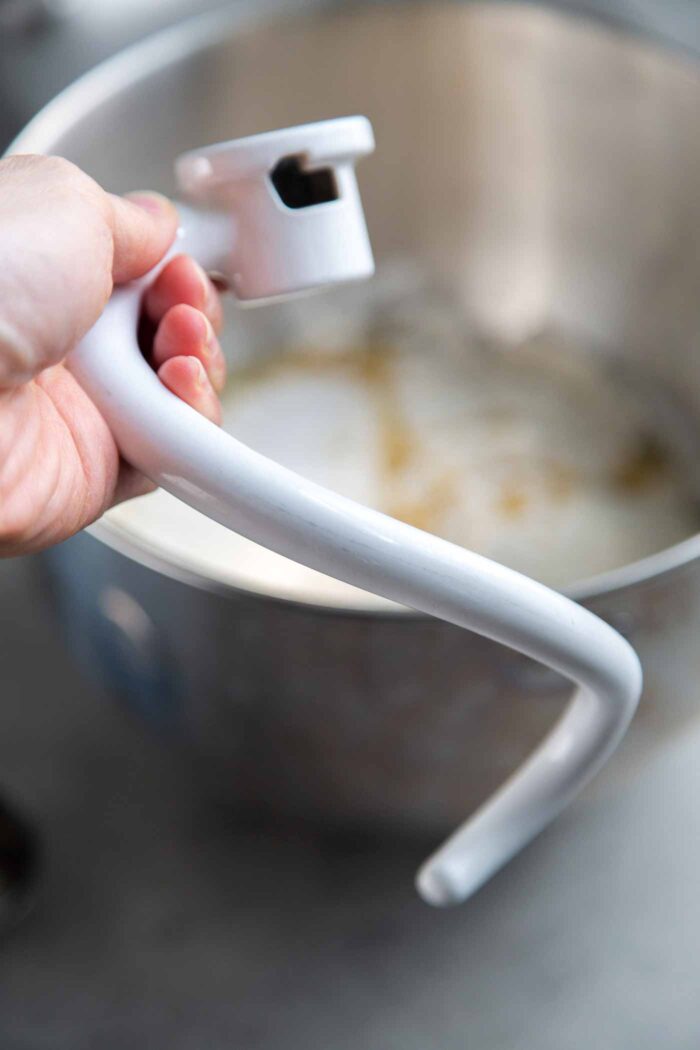
Dough Hook Attachment
There are two main types of dough hook attachments for stand mixers. The most common one is shaped like a corkscrew (like the one photographed above). The other version looks more like a fishing hook.
This dough hook attachment mimics the motions of kneading. The hook turns and folds the dough similar to kneading the dough by hand. As the name suggests, dough hooks are primarily used for mixing together dough such bread rolls, sticky buns, and pretzels.
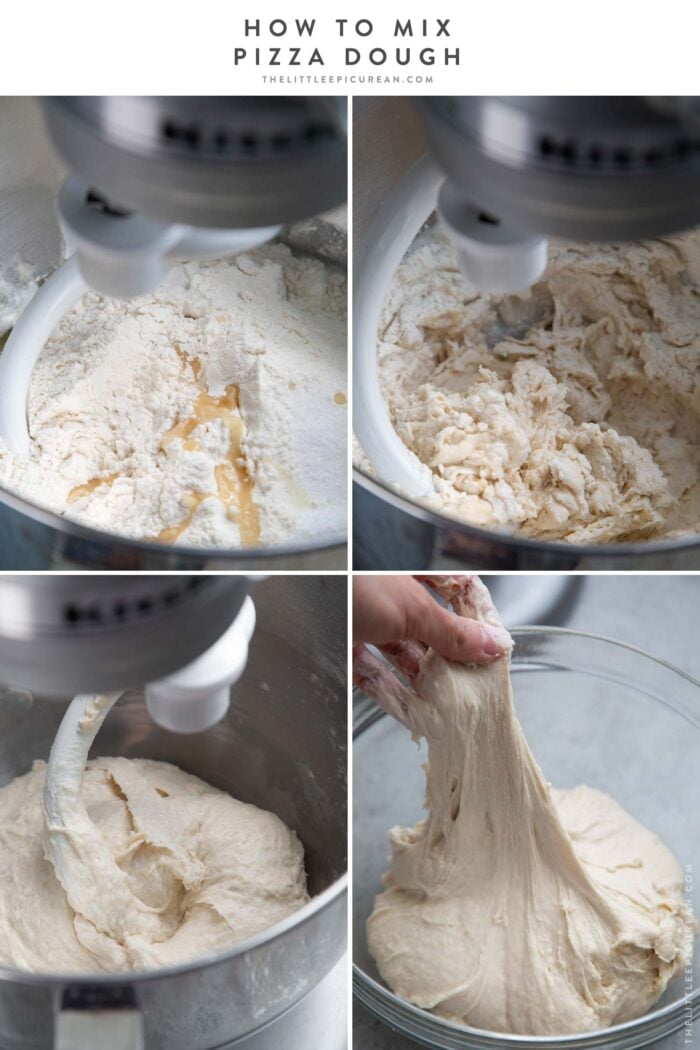
Step by Step: How to Make Pizza Dough
Step 1: Activate the Yeast (for Active Dry Yeast)
In the bowl of your stand mixer, whisk together the yeast, 1 teaspoon of sugar, and the warm water. Let sit for 5–7 minutes until the mixture is cloudy and foamy. This means your yeast is alive and ready to go.
If using instant yeast: skip this step and whisk the yeast directly with your dry ingredients.
Step 2: Mix the Dough
Add the remaining sugar, both flours, kosher salt, and olive oil to the yeast mixture. Attach the dough hook to your stand mixer.
Start mixing on low speed until the ingredients come together into a shaggy, rough-looking mass. It won’t be pretty at this stage.
Step 3: Knead
Increase the speed to medium and knead for about 5 minutes, until the dough is smooth and cohesive.
Important: The dough will still be slightly tacky when it’s done — and that’s completely correct. Do not add extra flour to dry it out. A tacky dough makes a more tender, flavorful crust. Grease your hands with a little olive oil if needed to handle it.
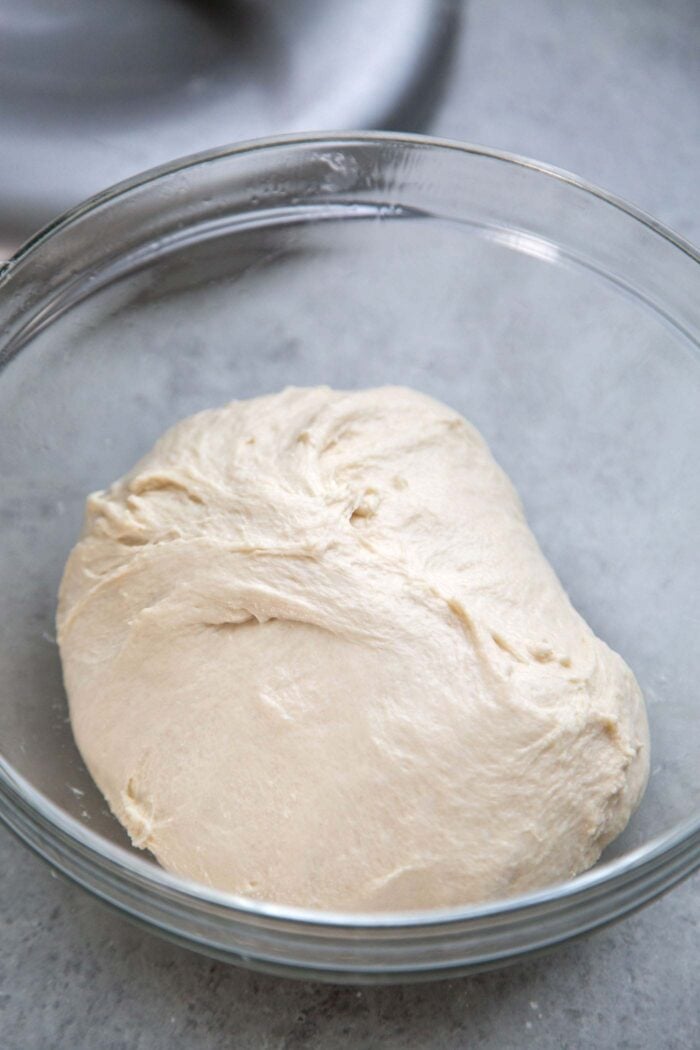
Step 4: First Rise
Transfer the dough to a large lightly greased bowl. Cover tightly with plastic wrap or a clean kitchen towel. Place in a warm, draft-free spot (such near your stove, on top of the fridge, or even inside your oven with just the oven light on).
Let the dough rest for about 1 hour, or until it has doubled in size.
Step 5: Divide and Rest
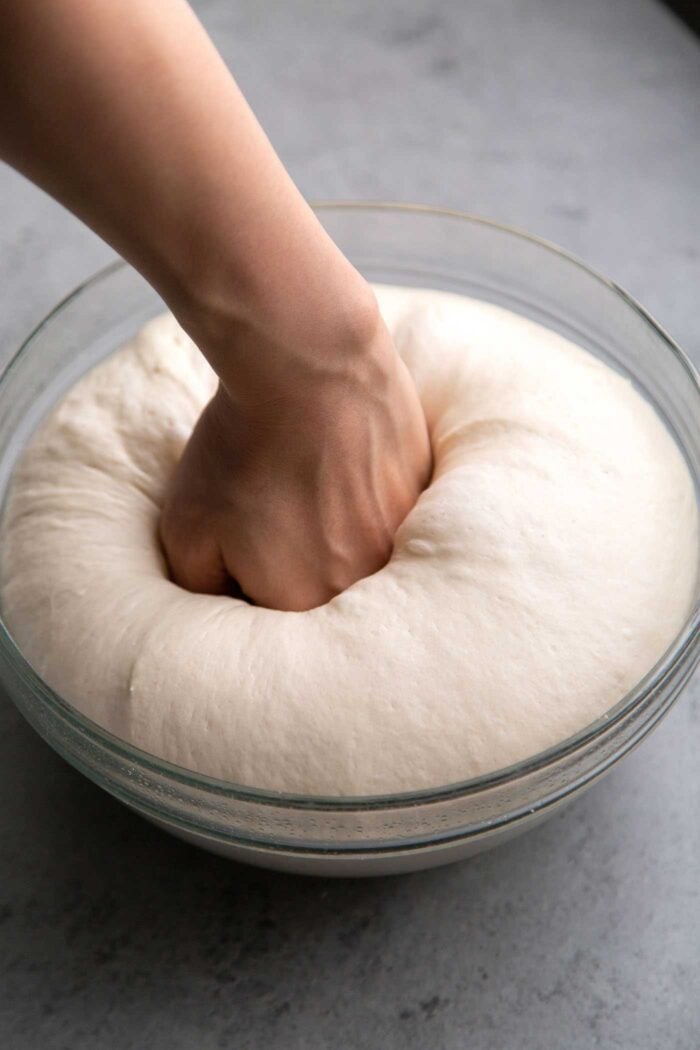
Grease your hands with a little oil. Punch down the risen dough to release the gas bubbles. Transfer to an oiled surface and divide into two equal portions. A kitchen scale is helpful here for precision.
Cover the dough portions loosely with plastic wrap and let rest for 15 minutes before shaping. This relaxes the gluten and makes the dough much easier to stretch without it snapping back.
Your dough is now ready to use!
How to Freeze Pizza Dough
This is where the real magic happens. Homemade pizza dough freezes beautifully, so I always make a double batch.
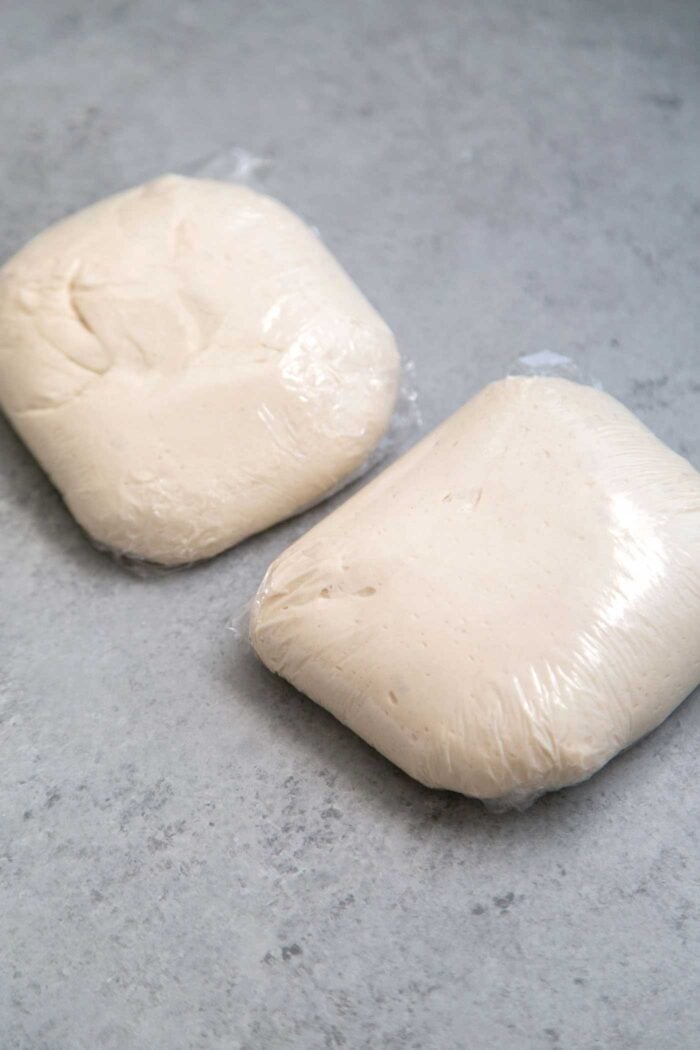
To freeze: Wrap each dough portion tightly in plastic wrap. Label with the date. Lay flat on a sheet tray and place in the freezer for about an hour until solid, then transfer to a zip-top freezer bag.
Frozen pizza dough will keep for up to 3 months.
To thaw: Keep the dough wrapped and transfer it from the freezer to the refrigerator the night before you plan to use it. The next day, remove from the fridge and let it sit at room temperature for 15–20 minutes before unwrapping and shaping.
This is genuinely one of my favorite meal prep moves. Pulling frozen pizza dough out of the freezer on a busy weeknight feels like a gift from your past self.
Use this easy pizza dough to make:
Easy Pizza Dough
Ingredients
- 7 grams ( 2 ¼ teaspoon) active dry yeast, or instant yeast
- 13 grams (1 Tablespoon) granulated sugar
- 340 grams (1 ½ cup) warm water, about 110℉
- 325 grams ( 2½ cup) bread flour
- 163 grams (1 ¼ cup) all-purpose flour
- 5 grams ( 2 teaspoon) kosher salt
- 25 grams (2 Tablespoon) olive oil
Instructions
- ACTIVE DRY YEAST: In the bowl of the stand mixer, whisk yeast, 1 tsp sugar, and warm water. Let sit for 5 to 7 minutes until mixture is cloudy and foamy.
- Add in remaining 2 tsp sugar, bread flour, all-purpose flour, salt, and olive oil.
- Attach dough hook to stand mixer. Mix on slow speed until shaggy mess forms.
- Increase speed to medium and knead for 5 minutes until dough is smooth.*Dough will be tacky. Don't be tempted to add more flour.
- Grease your hands with oil or use an oiled bench scraper. Transfer dough to a large greased bowl.
- Cover bowl with plastic wrap. Place in a warm area and let dough rest for an hour until doubled in volume.
- Grease hands with oil. Punch down risen dough. Place dough on an oiled surface (like an oiled cutting board) and divide into two equal parts. Use a digital scale for accuracy.
- Cover dough with plastic wrap and let rest for 15 minutes before use.*Follow instructions in notes regarding freezing extra dough.
- Follow recipe for your favorite pizza recipe that uses 1 pound (16 oz) pizza dough.
Notes
- Use instant or dry active yeast:
- To use instant yeast, simply mix the yeast with the dry ingredients. The instant yeast does not need to be dissolved or activated in water ahead of time.
- INSTANT YEAST: Whisk together yeast, sugar, bread flour, all-purpose flour, and salt in the bowl of a stand mixer.
- Flour:
- Use the listed amounts of combined bread flour and all-purpose flour.
- Alternatively, use 3 3/4 cup (488 grams) of one type of flour- either APF or bread flour.
- Olive oil. Use cooking olive oil or extra-virgin olive oil.
Nutrition
Nutrition information is automatically calculated, so should only be used as an approximation.
 Like this recipe? Rate & comment below!
FAQs
Yes, absolutely! A slow, cold rise actually develops more flavor! After mixing and kneading, cover the dough tightly and refrigerate overnight (up to 24 hours). Pull it out and let it come to room temperature for 30–45 minutes before shaping.
00 flour is wonderful for thin, Neapolitan-style pizzas. However, it absorbs water differently than all-purpose or bread flour because it’s much more finely milled. If you want to use 00 flour, you’ll need to reduce the water in this recipe. I recommend starting with about 20% less water and adjusting from there.







There is an unanswered question from 2022 below about 00 flour substitutions. I have the same question. I use 00 flour in other pizza dough.
For this specific recipe I recommend using APF or Bread flour mixed with APF due to hydration amount. 00 flour is great for thin Neapolitan-style pizzas. However, 00 flour also absorbs water differently than APF. Because the flour is much finer, you will need less water than what is listed in this recipe.
Is it possible to use a food processor instead of stand mixer?
I’ve never tested this recipe using a food processor, though many models do come with a dough blade attachment. The dough can also be mixed together by hand
So good! Tough was sticky but so luscious, and I never added any extra flour. Thank you so much!
A great pizza dough recipe, and so easy! Really enough for three cast iron pizzas. Also very good for cinnamon rolls. Wish I could figure out how to keep the dough rising before it freezes.
The dough will slightly rise and puff up as it freezer. To prevent this, try placing the dough in the deepest, coldest part of the freezer.
I’ve been using this as my go-to recipe for pizza dough for a couple of years now, and I love it! Tasty, great texture, stands up to toppings — it’s got it all. A couple of questions: can I sub in pizza (00) flour for either bread or AP? And when preparing the dough, should I use more olive oil for stretching, or is flour ok? Thanks so much!